The Other for One 2 0 0 7

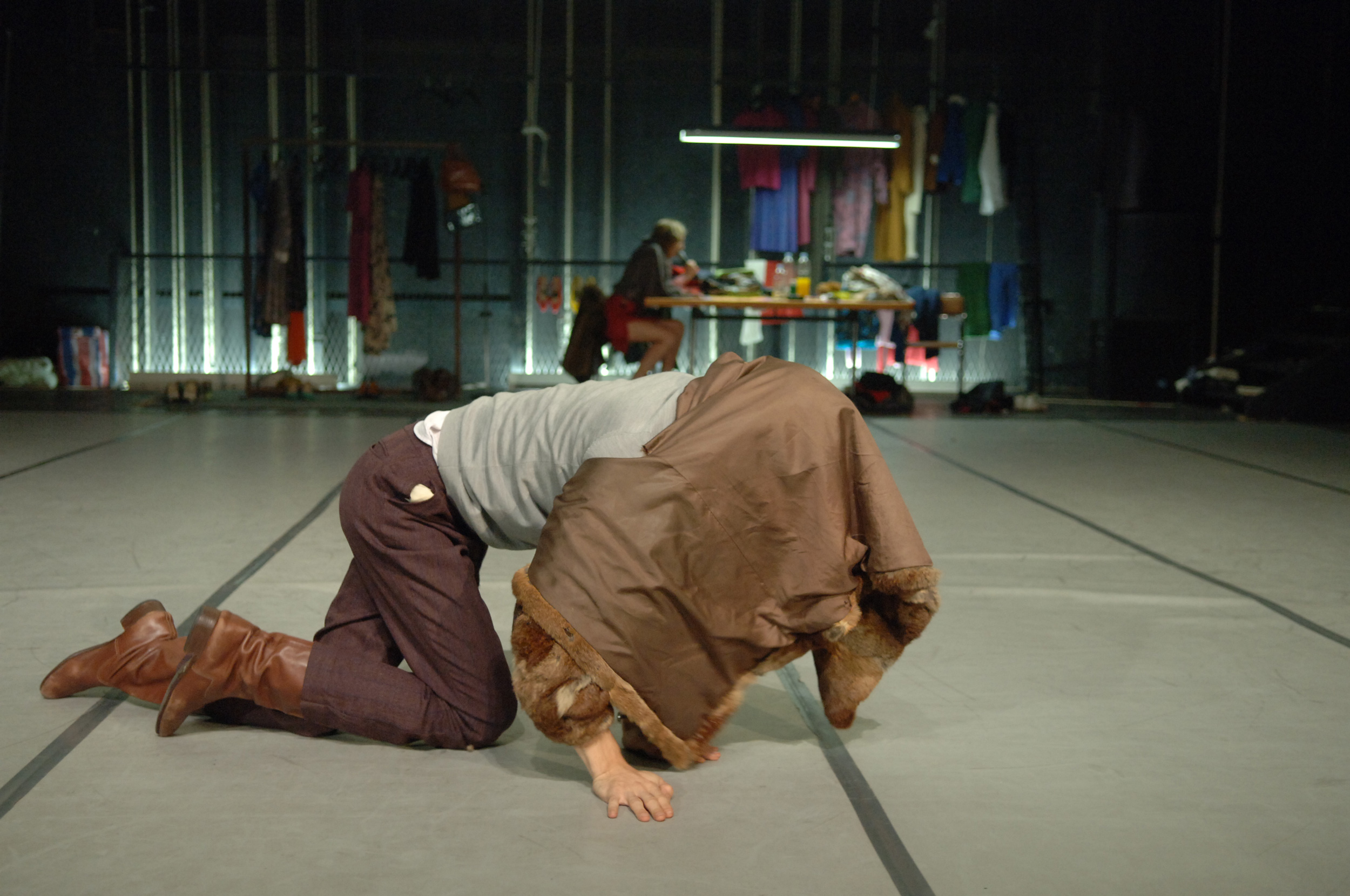
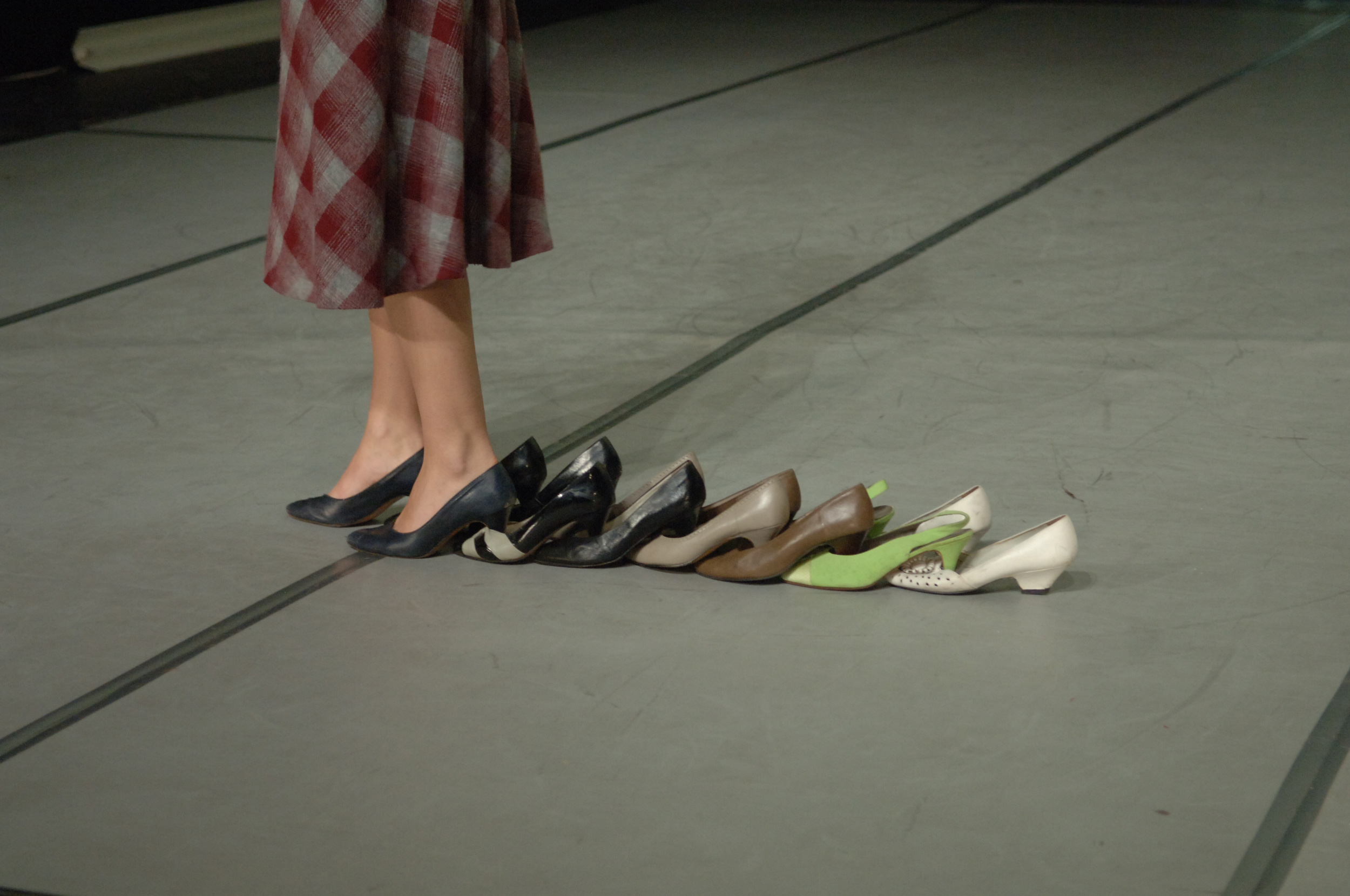
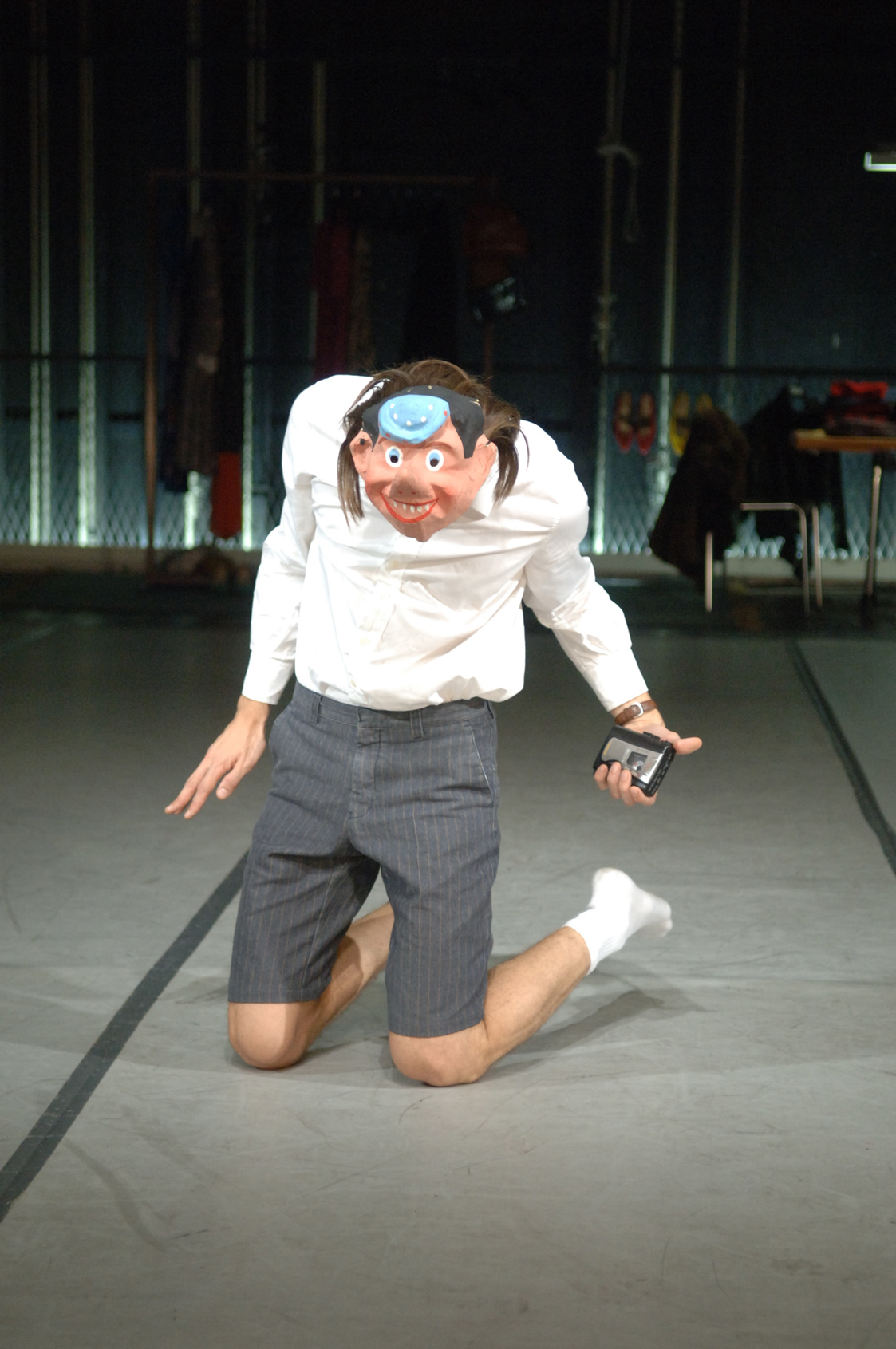
After the performance of Sad Sam Revisited Matija Ferlin continues to research the concept of pure stage presence, which is, again, visible in The Other for One. The most intimate content related to a topic of love, or relationships, hence, functions as a procedure for his bodily interpretation of complementarity. Using the experience of falling in love, falling out of love, deception, flirtation, sexuality, sin, and other physical, emotional, and psychic sensations, in the relationship between two people – this time in a form of duo with Dijana Vidušin – he decomposes a normative “love score” onto its primary choreographic elements, as though in an exercise for “enacting” a relationship, but other way around. All the elements of a heteronormative score are thus present: a common place that can function as a flat, common procedures of living together, or being in love, etc. Relationship metaphors are often of directional nature: a love letter addressed to(wards) him in the first sequence, female confessions about their love life, variety of quotes from the Bible, as well as its comments, love advertisements, etc. Popular songs about love function also as directional interludes, informing the viewers about the nature of this (or every) relationship, which is often blinded, as well as the performers, therefore, roaming on the stage with their heads covered by everyday clothes. Verbality is, thus, suspended, slightly before it turns towards repetition, although here, on the contrary, entirely in verbal manner. Performers repeat each other’s short sentences, not ready to acknowledge the repetition as their main dramaturgical procedure: “I apologize for constantly repeating myself”. This performance tends to ignore its decorative moment, obviously related to physicality of two bodies, colliding, conflicting, flirting, transforming each other, as it pursues in its research of pure stage presence. Within the performance's emotive ebb and flow, Ferlin and Vidušin channel shared memories - they are friends and have similar artistic background - shaping a compelling portray of the two body’s ascension to pure love, as well as their decays into quotidian conflicts. The narrative complexity of this performance is reminiscent of different phenomenological concepts of intersubjectivity, blurring boundaries between personal history and artistic expression. Ferlin's choreographic canvas, often punctuated by shifts in attire and scenery, somewhat even robust, or animalistic (in one short sequence they seem to impersonate animals), echoes with the mutability of relationships, a theme woven into the fabric of Nietzschean ponderings on recurrence, and again - repetition. Amidst the performative tapestry, a recurring motif of a enveloping fur serves as both a literal and symbolic shelter, evoking musings on deviant heterotopias, liminal spaces that challenge conventional understanding of humanity – as the strongest kind. Fur's tactile presence unveils a vulnerable, unadorned humanity, emphasizing the inherent openness, responsibility, and interconnectedness between individuals - that are always, like the Bible says, the other for one. Ferlin and Vidušin, as two metamorphic entities on the stage, changing constantly, traverse temporal and spatial dimensions of performance, or dance as such, emblematic as a durée-structure, i.e., a continuous flow of subjective experience. Their fluid transformations reflect an intricate dance of human desire, echoing an exploration akin to poetic reverie and the queer dialectics of daydreaming about better futurity. In conclusion, Ferlin's performance of The Other for One, an artistic symphony of vulnerability, and complexity, invokes a pantheon of ideas and philosophical notions. If the performance of Sad Sam Revisited deals with the elusive borders of the embodied imaginative spaces, constantly redirecting the viewers perspective from its traumatic narrative to the outer imaginative turn, towards its soloistic choreography, then, on the other hand, The Other for One pursues the problematic question of complementarity, whether as performance structure of twofoldness, or duo, whether as a metaphor of life, or human relations in it, which surpass art-as-life with its ambivalence, contingency, or even traumatic experience.




was presented at :
2009
Days of Contemporary Dance, Croatian National Theatre, Varaždin, HR
March 2009
2008
Bosnian National Theatre, Sarajevo, BA
June 2008
Gorica Evenings Festival, Velika Gorica, HR
June 2008
The Croat Theatre of Pécs, Mađarska, HU
September 2008
National Theatre, Subotica, RS
September 2008
National Theatre Toša Jovanović, Zrenjanin, RS
September 2008
Serbian National Theatre, Novi Sad, RS
September 2008
2007–2009
Istrian National Theatre, Pula, HR
October 2007- January 2009
2007
POU, Labin, HR
December 2007