PROJECTS

Staging a Play: Tartuffe 2 0 1 7
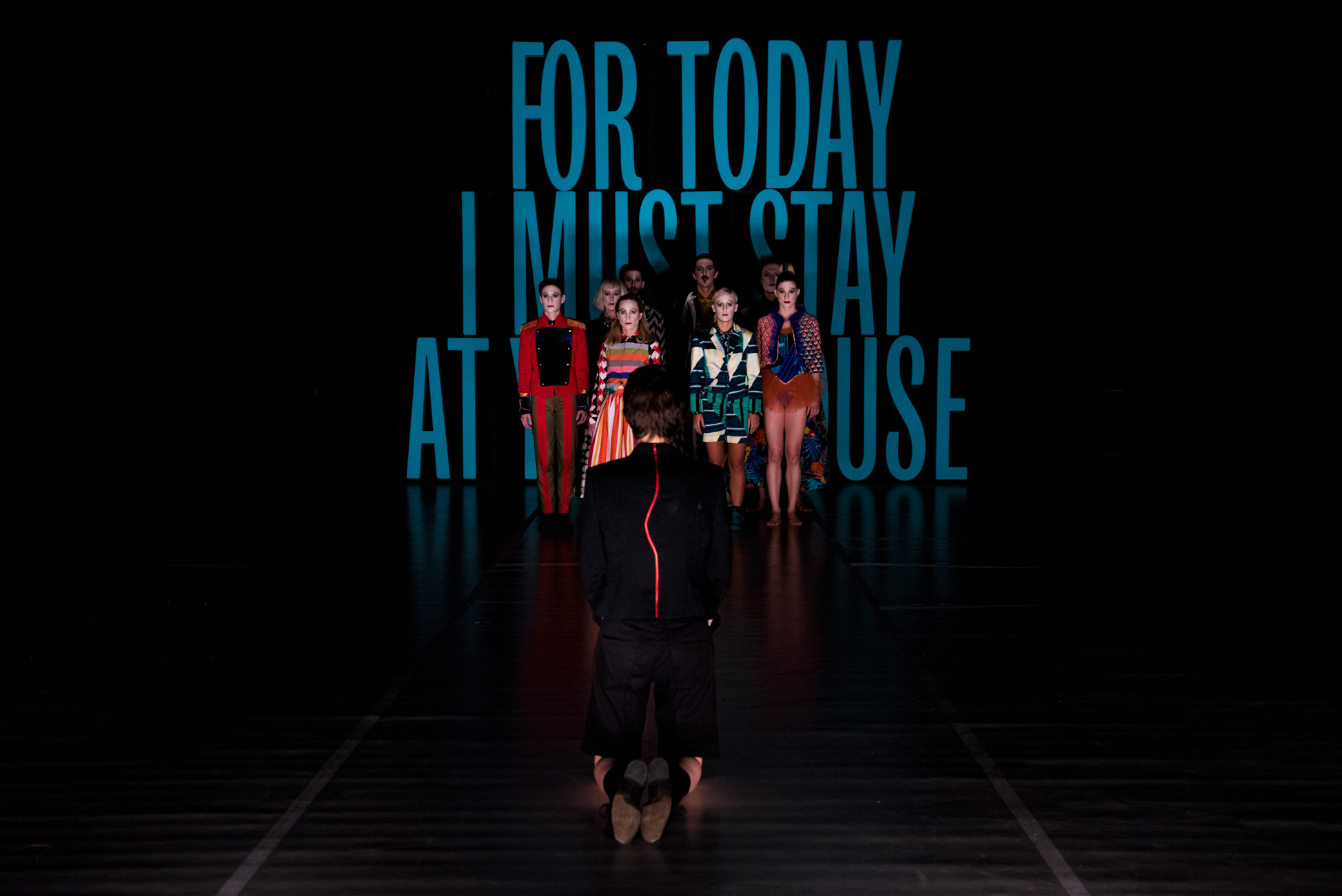

PHOTO BY JELENA JANKOVIĆ
STAGING A PLAY: TARUFFE  . Direction, choreography Matija Ferlin . Performance, choreography Petra Chelfi . Andreja Jandrić . Domagoj Janković . Darko Japelj . Sintija Kučić . Marin Lemić . Roberta Milevoj . Petra Valentić . Kasija Vrbanac (Zagreb Dance Company with guests) . Dramaturgy Jasna Jasna Žmak . Stage design Mauricio Ferlin . Music Luka Prinčič . Matjaž Predanič . Costume design Matija Ferlin . Desanka Janković . Light design, technical direction Saša Fistrić . Production & partners Zagreb Dance Company . Istrian National Theatre — Pula City Theatre . Zagreb Youth Theatre 

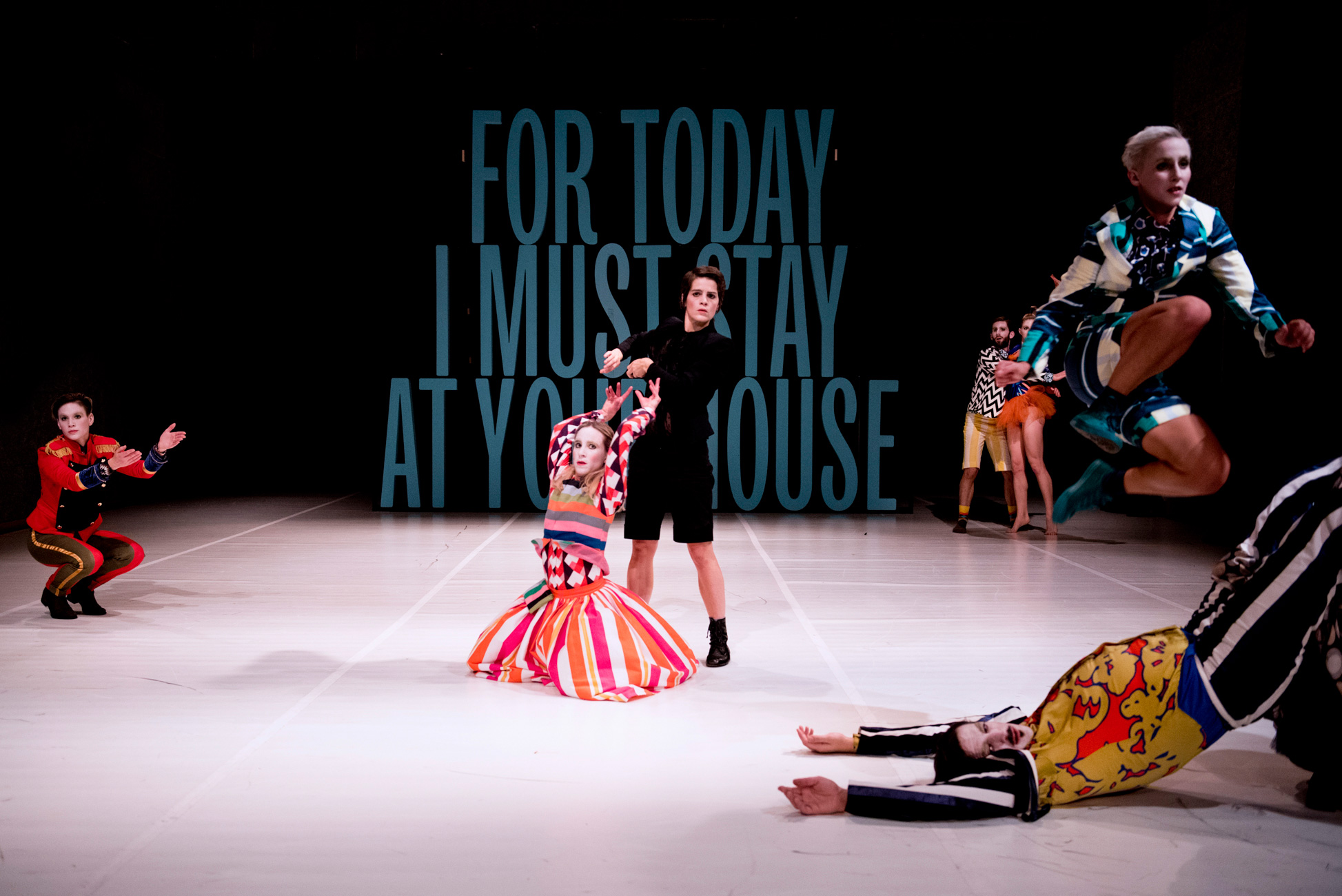
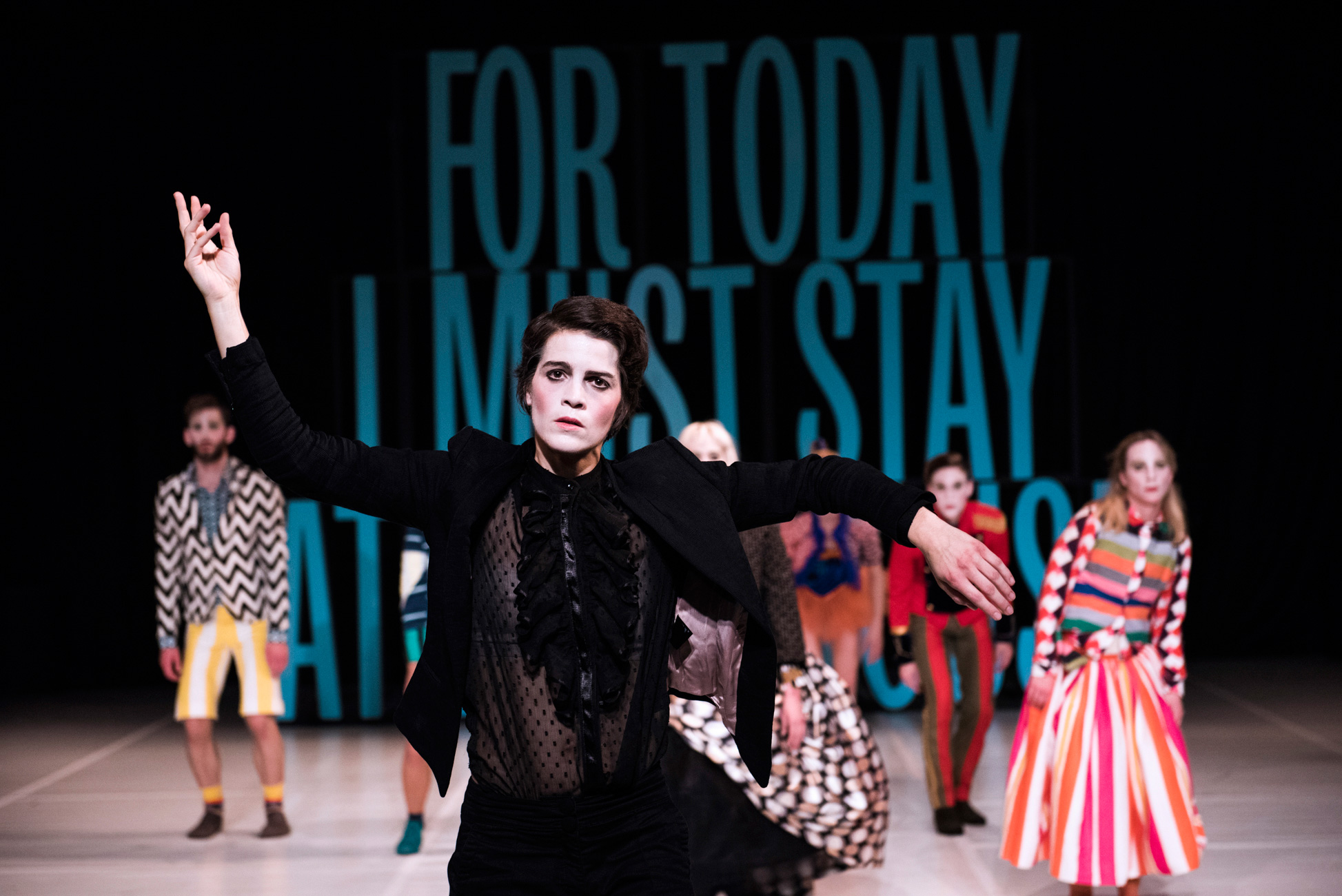
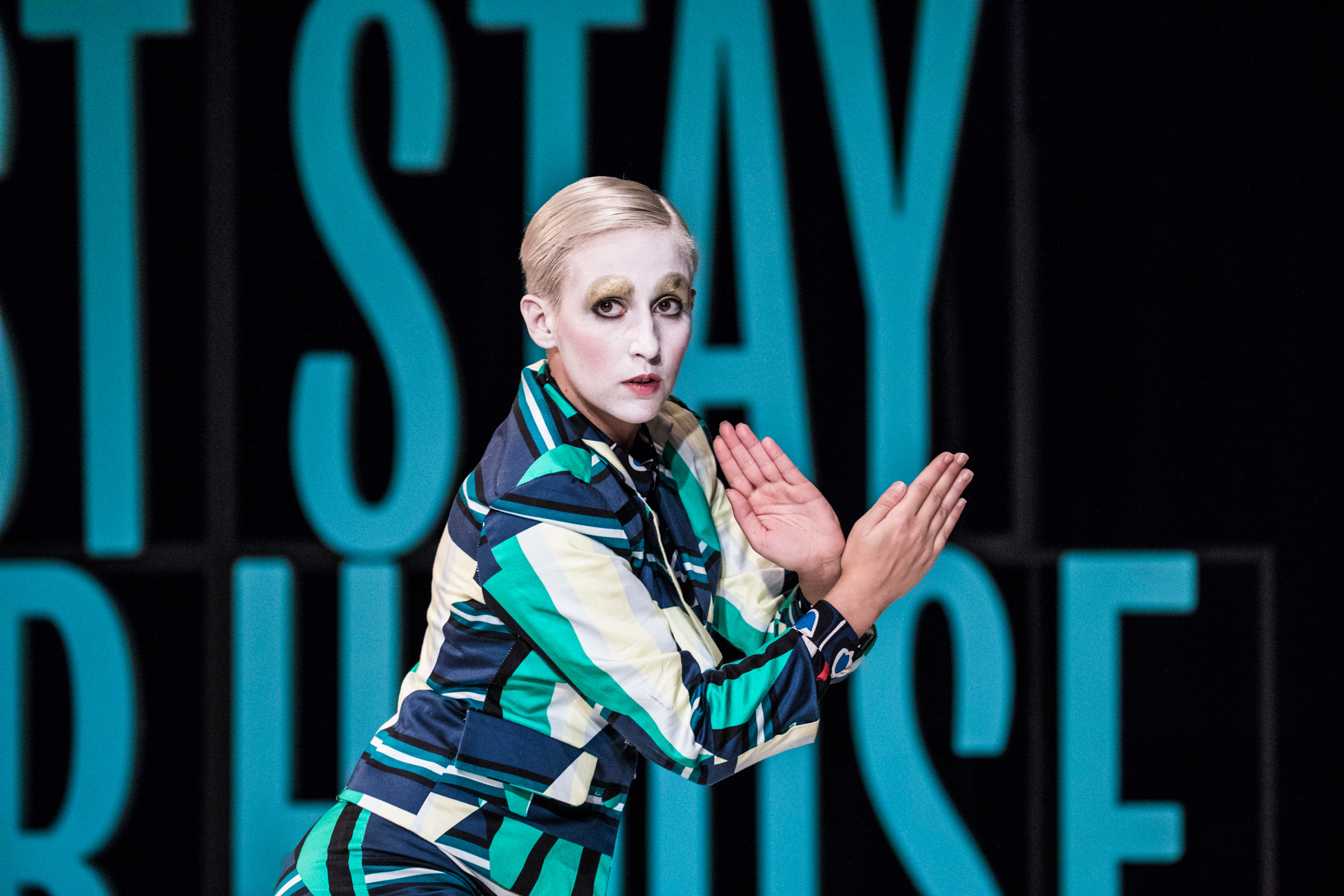
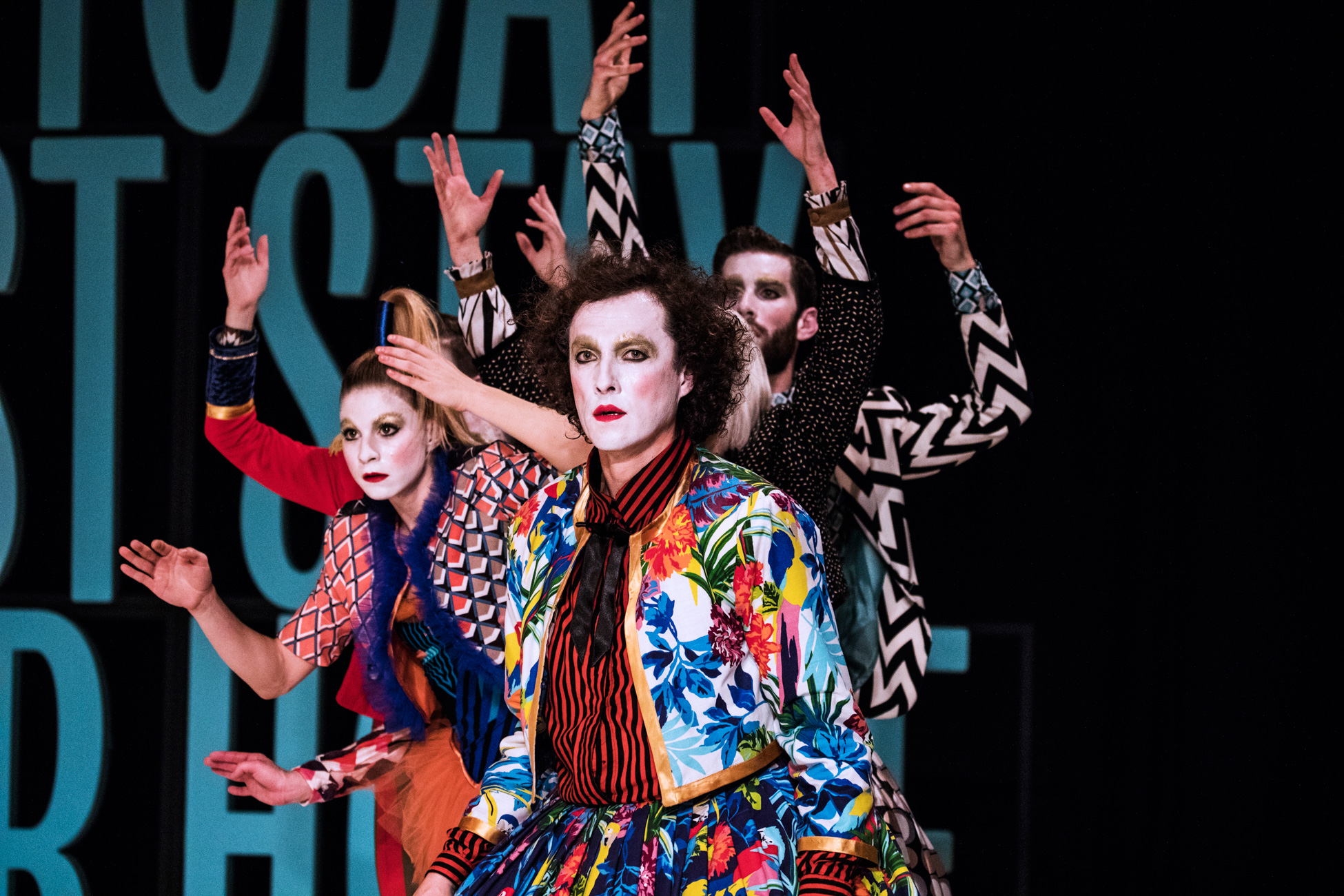
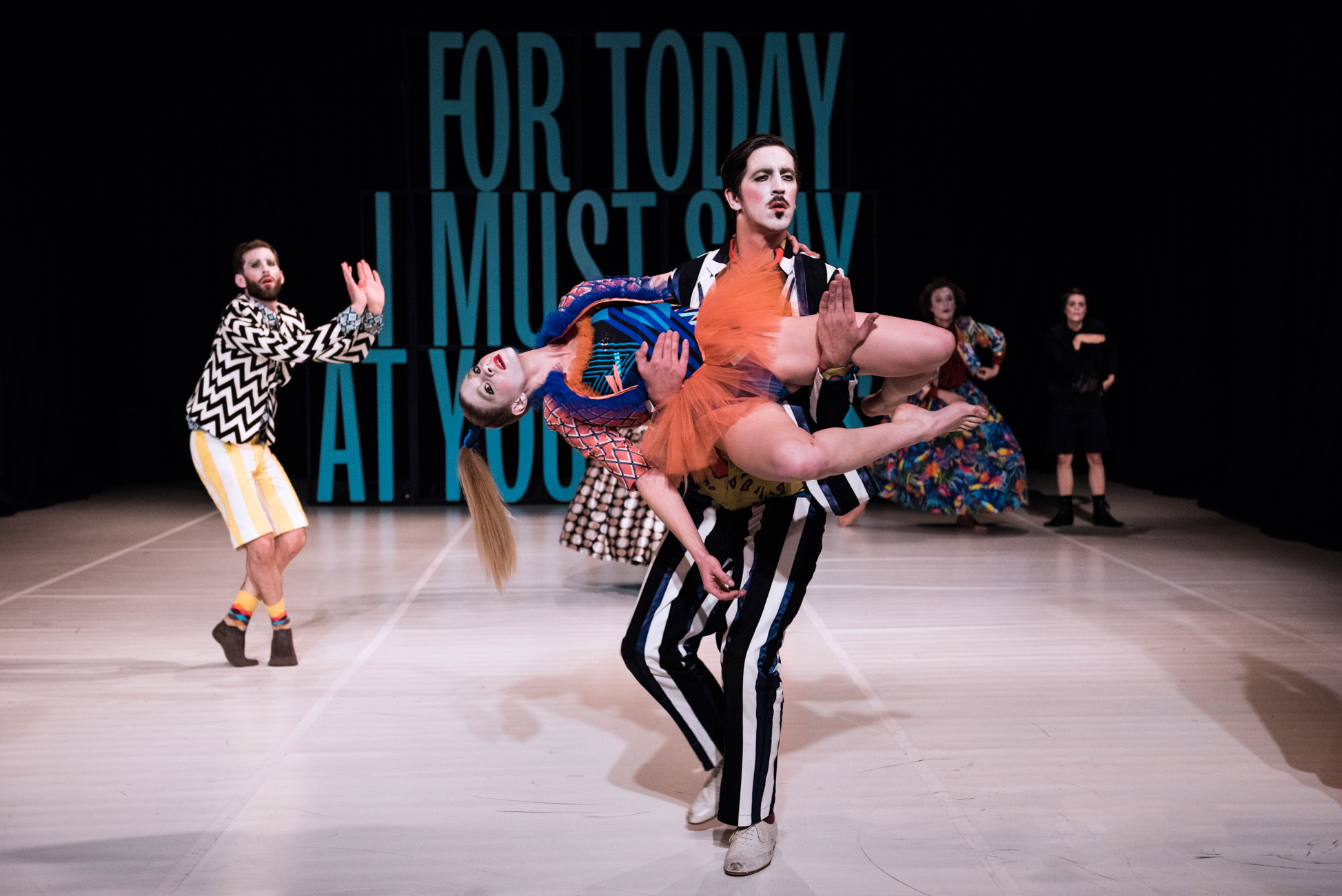
In Staging a Play: Tartuffe all performers perform silently while saying Molière’s text for themselves, thus auto-translating it into a most intimate choreo-text. If everything is put on the performer’s body, then, this body is naked. Tartuffe purposely eliminates a fourth wall, forcing its performers to constantly gaze at the audience, preaching its suffering, but also creating discomfort and unbearable tension as every spectator, that silent witness, enters the sphere of “mantric” repetitiveness enhanced by the music. Even though their movements are very limited, performers manage to embody images, lined up like a deck of cards, wearing almost intolerable and hyper-colourful costumes. As performers in space are the sole carriers of Molière’s narrative - in a way deconstructing it, although always keeping in mind that the plot is canonical, and thus known to the audience – their bodies are often trapped between pure illustrations and bare abstractions. Ferlin’s approach to movement here is totally conceptual, sometimes even over-expressive, not really eager to engage in “staging” a well-known plot in a literal manner, nor by pure gesticulation, nor by acting, but in a manner of neoclassical orchestra, hence, keeping the entire ensemble – in all its colourism - constantly on the stage. Colourful costumes sometimes become characters for themselves, almost in a constructivist sense of the word, e.g., in a case of ingenious narrative framing of the performance with an initial appearance of a thin, naked, and hungry Tartuffe, and his final decay in a figure of the performer with stomach full of material remains, and a grotesquely stretched mask consisting of different layers of other people's personalities. Layering that is persistent to this “staging” elevates the costume design to the level of signification’s surplus, that speaks for itself, insofar as all of the performers are not allowed to speak. They have learned their roles by heart, thus performing their movements according to the text that resonates silently in their heads, beneath all this costume and makeup. In-between patchwork and geometry, simplicity and colourism, a costume becomes “the body’s new body”, as in the case of a good minus-procedure in pop-art. Therefore, non-spoken endurance of the body, where one is forced to speak but to stay silent, becomes visible in the performer’s costume as well, which is not only interconnected with the potency of choreography, but with almost a stroboscopic strength of dynamic colours dispersed on the stage. The afore mentioned examples clearly demonstrate that “staging” in Matija Ferlin’s choreographic vocabulary is, indeed, an intersemiotic process of translation, relying insomuch as on differing as on bridging the gap between different idiomatic systems in the play. The concept of “staging” is far from coherent in contemporary theatre, dance, or performance, as it often dwells upon the multitude of signs, signals, and codes on the scene, as the example of postdramatic theatre has often demonstrated. Potency that this concept has gained over time often goes hand by hand with the process of peeling of semiotic signs, which makes it even more vague, or even blurry. Specific performative poetics that Matija Ferlin and his team have developed so far, mostly in the mode of “staging” by “re-wording”, or intersemiotically translating different canonical texts, within the Staging a Play series, offers a specific interpretation of performance art as something simultaneously distanced and close to dramatic theatre. By transferring a dramatic matrix from the “textual” to the choreographic domain, their apparently immanent, dramatic (or conventionally linguistic) verbality does not only represent a point of criticism of the occidental performative logocentrism sui generis, but also imposes a new model of their close reading, through the lenses of different arts. Staging a Play project, therefore, differs from conventional staging manoeuvres not only by translating words into movements, or conventional dramatic vocabulary into their physical equivalents, but by pushing the boundaries of a pre-established creation and perception of the theatrical event, as such. The term staging, which usually implies directing, dramaturgy, usually leaving scenography, costume design, lights, and sound, etc., somewhat besides, often as peripheral elements, is therefore, in this project, utterly redefined. Relationship between staging and choreographing a literary canon, thus, opened a space for a continuous semiosis, where, simultaneously, running away from dramatic text and running away from dance is equally beneficial, mainly because it stays open towards all possibilities of interweaving, between pure bodies, voices, gestures, objects, their environment, and their instrumentalization. And then, language of drama occurs in different forms, i.e., choreographically, through costumes, props, set design, or even syncretically, privileging this other focal point, which then sets a secondary tool of a conventional Western dramatic theatre, e.g., set, costumes, and props, in a primary place, as they are equally eager to enthrone themselves as the apparatus to articulate the spoken word. His Tartuffe purposely eliminates a fourth wall, forcing its performers to constantly gaze at the audience, therefore preaching its suffering, but also creating discomfort and unbearable tension - as every spectator, that silent witness, enters the sphere of “mantric” repetitiveness enhanced by the music. Even though their movements are very limited, performers manage to embody images, lined up like a deck of cards, wearing almost intolerable and hyper-colourful costumes. As performers in space are the sole carriers of Molière’s narrative - in a way deconstructing it, although always keeping in mind that the plot is canonical, and thus known to the audience – their bodies are often trapped between pure illustrations and bare abstractions. Layering that is persistent to this “staging” elevates the language suspension to a level of signification’s surplus, that “speaks” for itself, but only insofar as all of the performers are not allowed to speak. They have learned their roles by heart, thus performing movements according to the text that resonates silently in their heads.

Read more

PHOTO BY JELENA JANKOVIĆ

was presented at :

2021


Zagreb Youth Theatre, Zagreb, HR
April 2021


Shakespeare Theatre Gdansk, PL
September 2021


2020


Bozar, Brussels, BE
March 2020


2019


ARGEkultur, Salzburg, AT
April 2019


Horizont International Contemporary Dance Festival, Miskolc, HU
April 2019


Kug-Teatar Im Palais, Graz, AT
July 2019


2018


Istrian National Theatre, Pula, HR
January & October 2018


Dance & Non-Verbal Theatre Festival San Vincenti, Svetvinčenat, HR
July 2018

Split Summer Festival, Split, HR
July 2018


Hvar Summer Festival, Hvar, HR
August 2018


Croatian Cultural Centre on Sušak, Rijeka, HR
September 2018


Vitilycke – Centre for Performing Arts, SE
November 2018


Bunker – The Old Power Station – Elektro Ljubljana, SI
December 2018


2017–2018


Zagreb Youth Theatre, Zagreb, HR
December 2017 - May 2018


2017


Mediterranean Dance Centre, Svetvinčenat, HR
November 2017