Solitaires 2 0 1 1

SOLITAIRES . Coreography, direction Matija Ferlin . Text Jasna Jasna Žmak . Performance Jadranka Đokić . Dijana Vidušin . Romina Vitasović . Lana Gojak . Vedran Živolić . Ana Vilenica . Csilla Barath Bastajić . Silvio Vovk . Lada Bonacci . Ivana Krizmanić . Jelena Miholjević . Matija Ferlin . Music Hildur Gudnadottir (Touch Music, MCPS) . Dramaturgy Sandro Siljan . Stage design Mauricio Ferlin . Costume design Matija Ferlin . Desanka Janković . Production Istrian Natioanl Theatre — Pula City Theatre
Read more
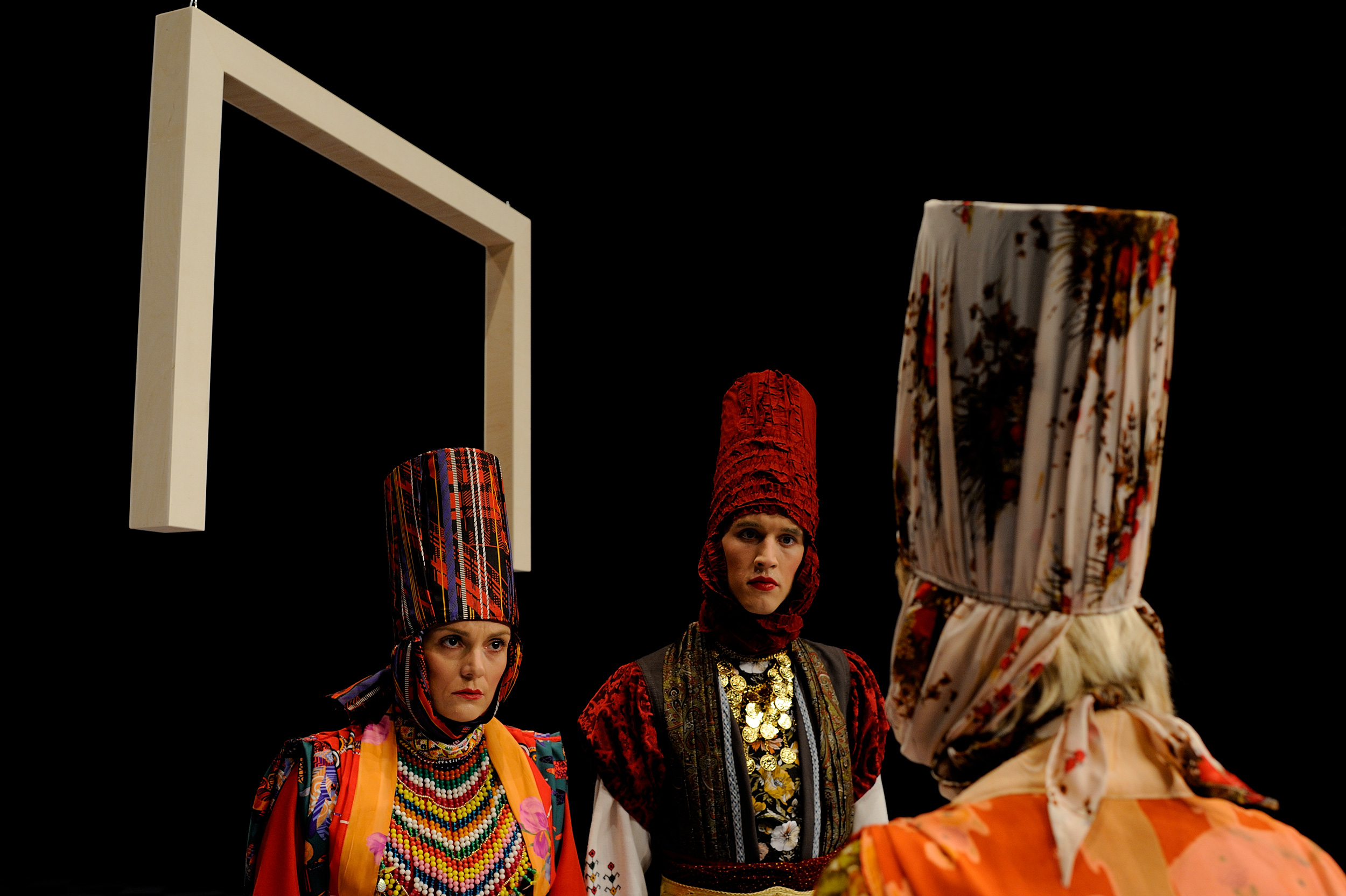
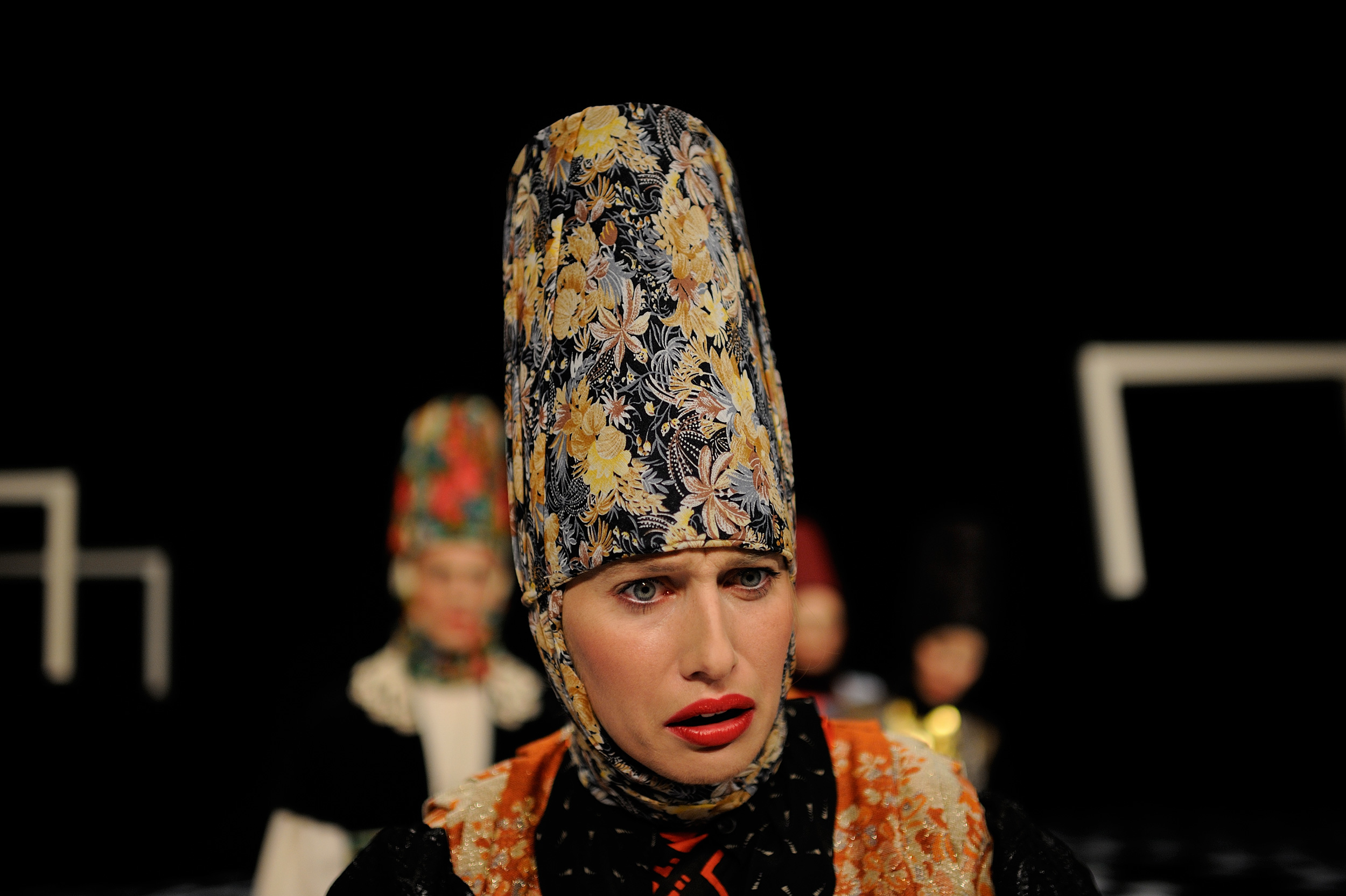
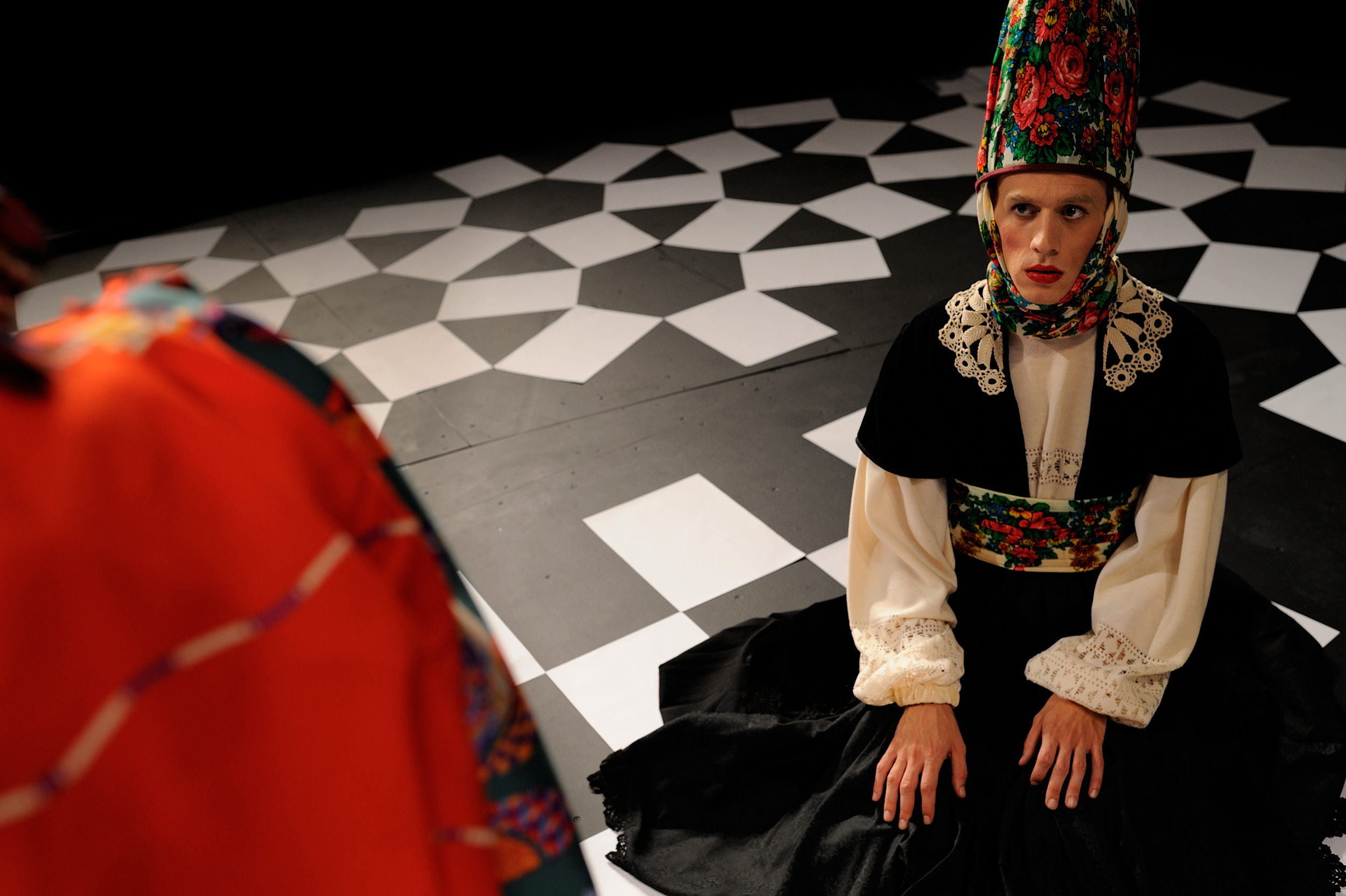
Ferlin’s Solitaires are, thus, grounded in the idea of staging a play, an idea that will be relevant for his later works as well - but a play conditionally perceived as dramatic structure, or almost a quasi-play, written by Jasna Žmak, where all characters speak backwards, therefore negotiating with a syntactic value of language, and its teleology. In this linguistic choreography, where the end of a sentence is “forced” to function as a beginning – triggering an almost avant-garde mechanic of de-employment, or deconstruction of dominant, normative perception of written language – presence of language is reflected, with all its future nuances. Indeed, syntactic structure exists only insofar it is deviated, only to be deconstructed, either in literature, or in spoken language. A language inserts a code, that eventually allows performers to enter – although on the back doors – and to start playing with this contingency of language structures. In his Solitaires, Ferlin was not so interested in developing dramatic characters, because they barely function as roles, or stage attributions (text is written in a sequence of sentences - almost like a poem), but he was trying to discover what happens if one speaks backwards while keeping the intonation of a text spoken in a regular manner, and, on the contrary, what mechanisms are triggered while breaking a text, or changing the meaning of a sentence, etc. In a way, by choreographing language, only to be able to introduce a physical code, Ferlin managed to transgress the common procedure of a choreographic dispositive. Hence, pre-written script is not followed here as a superordinated (choreo)graphic norm, not even deconstructed, but its linguistic instability is used to create a physical response. Or, in Ferlin’s own words: “In this concept, some will see a commentary on language, its critique, but, in my opinion, this performance should function as a praise of language and its possibilities”. Instabilities in language, or in performance, usually come from their immanence (and presence), and these stubborn procedures of settling choreography onto the background of its own artificial intelligence, its embodiment, is something that probably interests him the most. All aspects of the pre-written text, written for actors, and then enacted on the stage – that were formerly “glued together” – are being purposely dismantled here. As though as actors’ bodies function separately from their characters’ representation, so even audience is forced to treat them as autonomous realities. They are not actors, or dancers, they function in a realm of verbality, in theatrical language, but they do not embody it like “real” actors. Moreover, their somewhat exaggerated gestures of constant leveraging, balancing, half-kneeling positions, etc., function as trajectories that lead away from dancing-as-narration (as choreography) and acting-as-embodiment (as in modern, postdramatic pieces) towards constant differentiation of performative tools and mechanisms, that will eventually emphasise, both, a physical and linguistic gesture. What remains interesting here is a convergence of these two, inevitably divergent tendencies, one directed towards a stable concept, that can be understood, and other eager to deviate it, to constantly create new futurities for its development. Croatian word for solitaires is sàmice, as an unmarried wife, wife without children, lonely woman or a bird, a prison cell, etc., but in some dialects, it can even symbolize a sexual organ. What one sees on this simple stage, where most of the scenic elements hang from the ceiling - again being reversed, upside-down, the other way around – may function as a house, surviving form of a classical dramatic theatre, with different spatial, temporal, and narrative unities. But what it seems easy or predictable will soon become a deconstruction of the canonical scatola teatrale – a heterotopia of different performance possibilities.
PHOTOS BY DANKO STJEPANOVIĆ




was presented at :
2022
Sad Sam Manifestation, Cankarjev dom, Ljubljana, SI
November 2022
2019
Fortress Kaštel, Istrian National Theatre, HR
July-August 2012 & July 2019
Croatian National Theatre Zagreb, HR
May 2019
2012
Slovene National Theatre, Maribor, SI
February 2012
Festival glumca, Županja, HR
May 2012
Zagreb Youth Theatre, Zagreb, HR
May 2012
2011
Istrian National Theatre, Pula, HR
October 2011
Perforations Festival, Zagreb, HR
October 2011