Sad Sam Matthäus 2 0 2 1

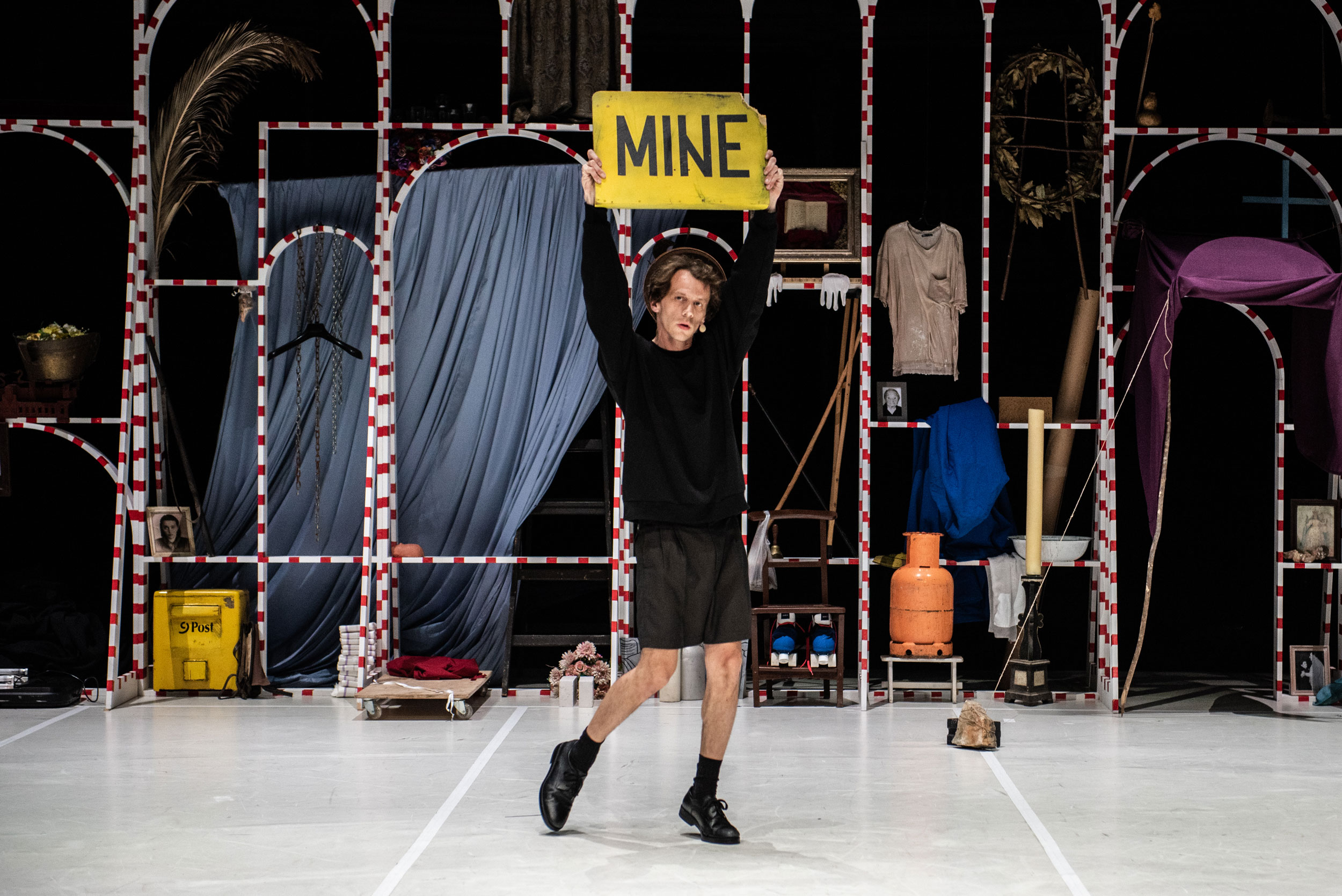
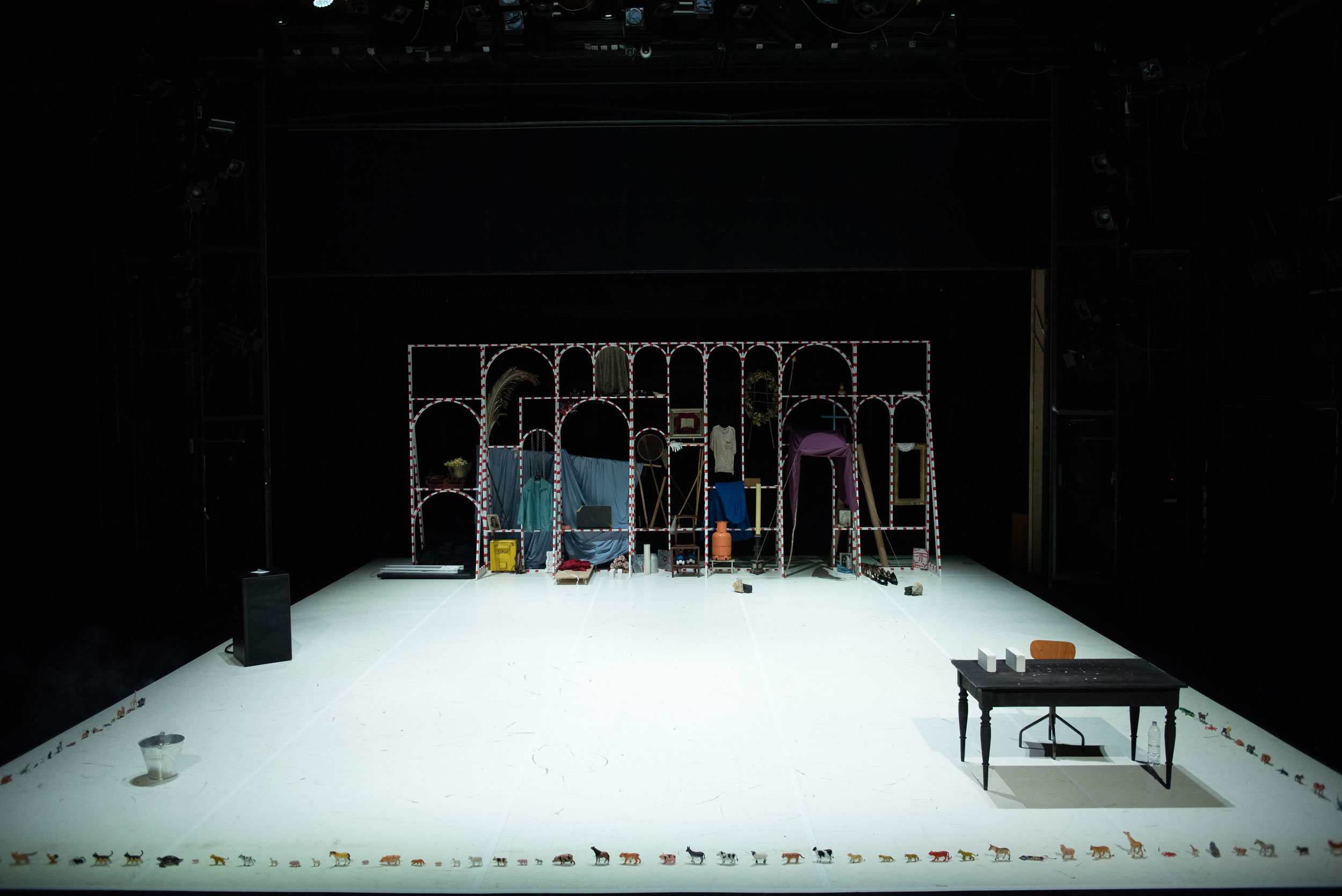
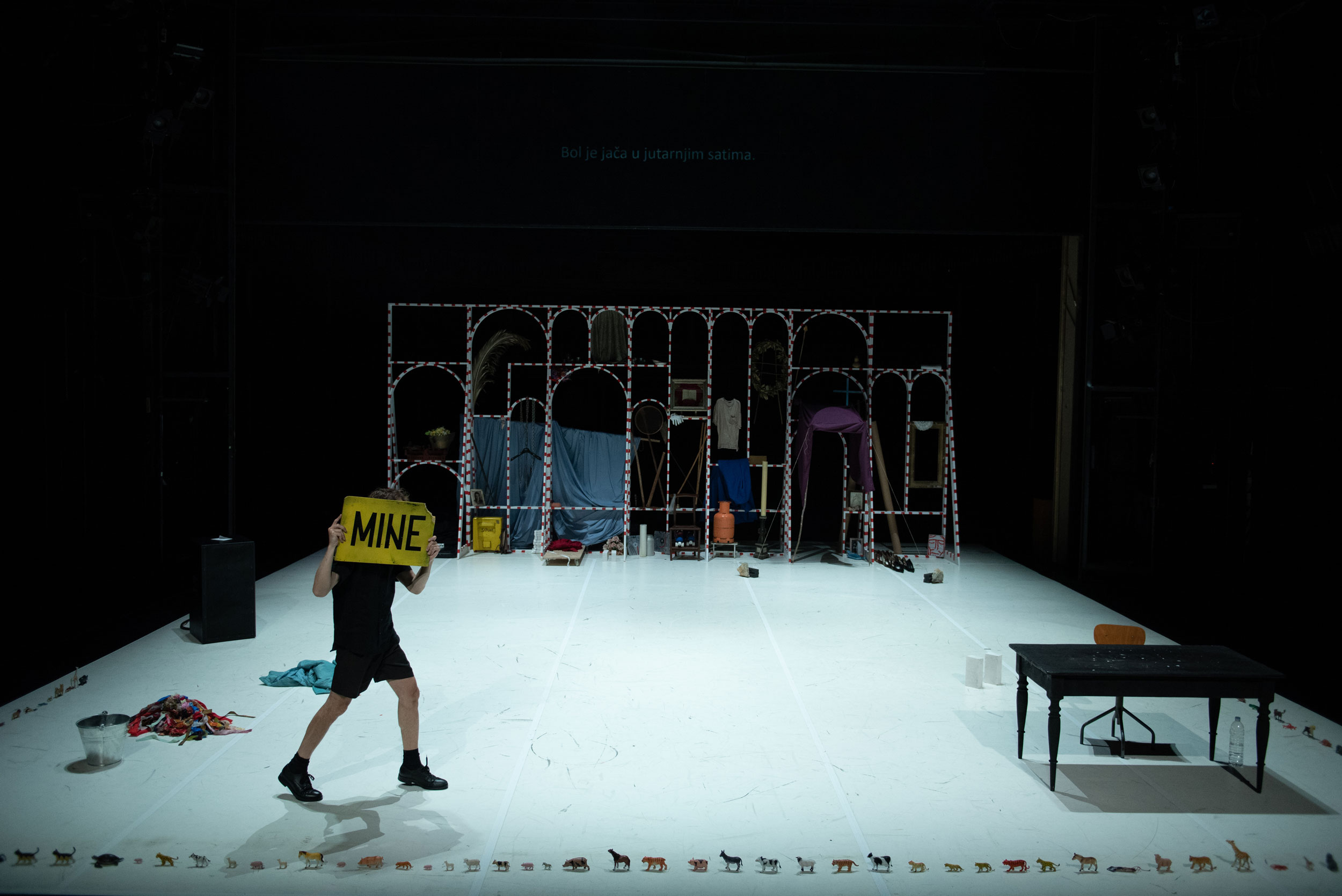
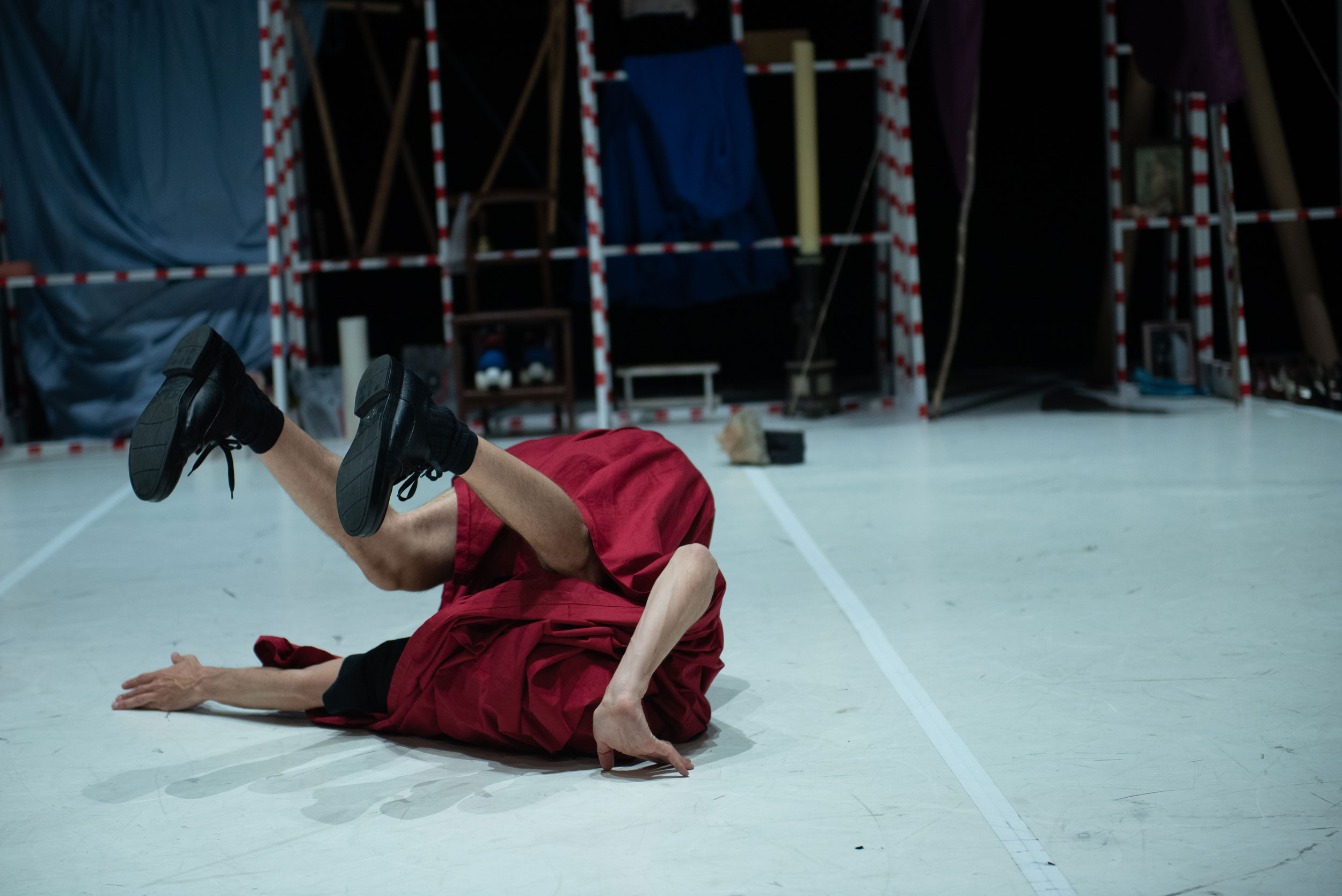
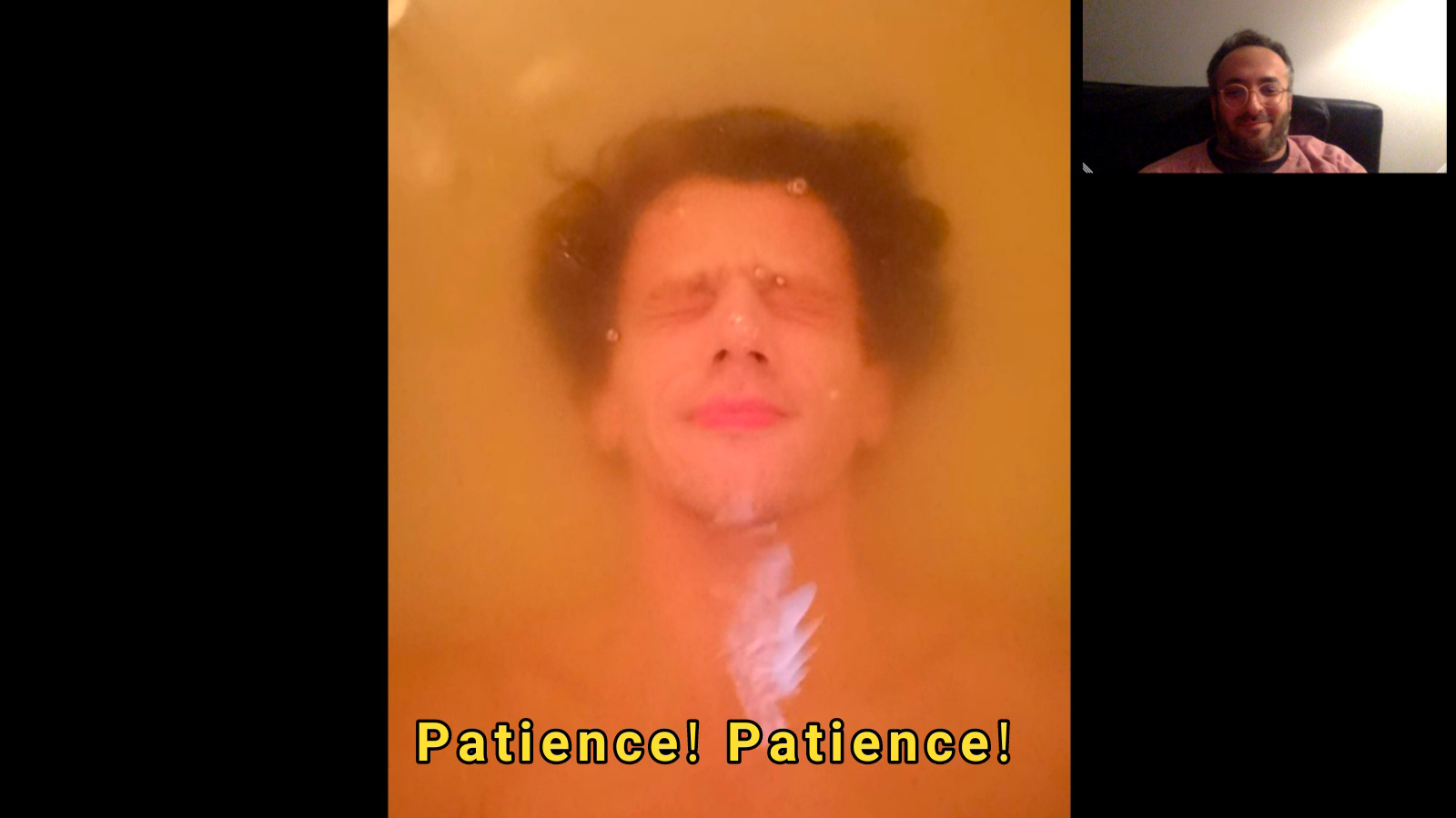
Matija Ferlin's performance Sad Sam Matthäus, in the footsteps of his earlier performances united under the title Sad Sam, is a continuation of the research into the relationship between choreography, text, and personal narrative. This time, however, the template for this special performative conversation becomes Johann Sebastian Bach's monumental oratory Matthäus-Passion through the recording of Phillip Hereweghe's performance (Collegium Vocale Gent), extremely strong vocal, musical, and narrative structure. A dialogical relationship with such a canon of the European cultural tradition is an incredible undertaking, first of all in terms of inherent desacralization and re-semantization of the original, but, at the same time, in terms of the integration of authorial (or performer’s) interventions, various museum-like choreo-artifacts, choreo-performative and dramaturgical contaminations, into the complex historical fabric of Bach's Passion text. The template is the Passion’s oratory, originally premiered on Easter Friday, in 1729, and, after that, three more times during Bach's lifetime, under the direction of the composer himself. It is structurally divided in two parts, primarily due to the fact that - in the context of the Lutheran evening rite of Good Friday - the first part was performed before the priest's sermon, and the second afterwards. It is by no means just a story, or a dramaturgy of Jesus' Passion and death, which through the biblical text, or, more precisely its paraphrases, interpolations of various verses, folklore-evangelical chorales, arias and recitatives, introduces the audience to the theme of the Passion, but, at the same time, represents a great rite, a ritual questioning the very ideas of communitas in the broadest sense of the word (as evidenced by numerous performances, especially the one by Peter Sellars from 2010). Hence, the minimalism of the structure that Bach inscribed in his oratory is more than obvious, almost in the form of a reflection, both in Ferlin's performance and in the incredibly precise dramaturgy of Goran Ferčec. Ferlin is quite aware that Johann Sebastian Bach’s Passion was written for the chamber ensemble, so he follows the perplexed structure of the first, i.e., the most important intertext. Furthermore, the first performance in Bach's lifetime was perfectly executed, by a total of thirty-four musicians, including soloists and a choir. That is known. And, anyway, today that work is performed, completely contrary to the wishes of the composer, by orchestras that have several hundred, even up to thousand performers. Thus, this lack of understanding, lack of the obligation for the interpreter, this arrogance of quantity, this desire for the multitude, all show a complete lack of musical education. At the very beginning of the performance of Sad Sam Matthäus, namely, the audience is confronted with a proxemic self-quotation from Ferlin's earlier work from Staging a Play cycle, dedicated to Antigone, which not only legitimizes the authorship (and that was precisely Bach's eternal obsession), but also the performance as such, which is, at the same time, always, both the composition and a performance of the composition. The shrubbery arranged on the scene, in a very precise and intentionally unstable composition, is of ritual provenance, moreover, connected with funeral ceremonies, which was of extreme importance in the author's research of Antigone's narrative, and it seems to be more than relevant here as well. The first part of Matthäus is almost exhausted in constant attempts to build/deconstruct the composition of “the wooden structure” on the stage, which Ferlin, under a heavy mask, performs with great precision, in an absolute time (synchronicity) with/to Bach's Passion. In such a performance of the composition - and it should be noted that, here, we are talking about an excellent metaleptic process of evoking the past work through the phenomenon of old age on stage, both in the libretto that comes through the speakers, and in the narration about Bach's life - a wide variety of topics related not only to Bach’s life and the tragic circumstances of its creation are integrated, e.g., his inner torments, lamentations on death, transience, artistic existence, the problem of framing one's own performance or, more broadly, artistic activity in general. Such a special mise-en-abîme is soon exposed in the performance, so a kind of tripartite reading (and its hermeneutics) is imposed on the viewer: reading a libretto and Bach's composition which is constantly present in the background, then reading the heterogeneous narratives that come from the speakers, or are spoken on the stage, and finally, the reading of the complex choreo-script of the performance itself, which is also, at the same time, (self)quotational and deeply referential in relation to the first two frames. This is precisely why Matthäus is re-read as a stage score, both, vertically and horizontally, whereby exceptional dramaturgical, choreographic and directorial attention is paid to the diverse and numerous parallelisms between all of the aforementioned three frames, or levels. Due to such constant multiplications, formal and semantic simultaneities and/or parallelisms, the global structure of Sad Sam Matthäus soon begins to resemble to a kind of (choreo)fugue, also Bach’s genre, where a certain theme is imitated according to pre-established rules and implemented through all of the voices, or, here, choreo-sections, from its first implementation, or exposition, until the final denouement. At the point where the fugue ends, both, in the context of the narrative and in the context of the performance itself, with Matthäus' quote from Bach's son about the composer's death, the concept of performability is actually most directly questioned. Should one finish what is yet unfinished? The performer takes off his mask, weights, transforms himself before the eyes of the viewer. After all, as the scene dissolves, even the duration of the performance itself is announced with a short note that the performance lasts another two hours. He then talks about the universal structure of Passion, puts a bug in his ear, and begins to speak, reuniting body and voice, intimate and public, that what had been completely separated until now. At that moment, the Passion (or structurally a fugue) seems to be revealed in the form of a parable. At the same time, concreteness is not replaced by abstraction. The parable points to a much more layered division - between life and fiction. “But I am alive!”, therefore, refers to the performer's liveliness, vitality, and, of course, to the symbolism of the resurrected Christ. Parabolic discourse normally tends towards anonymization of a subject, but not only in the sense of its “namelessness”, but, on the contrary, in the sense of constant generalization of some of its peculiarities. In the evangelical language, especially if it refers to the parables of Christ, the concept of parable has such a significant function that in Romance languages it also gave rise to a verb that means to speak. So, the relationship that is pre-established in the parable is always codified by the principle - as if. Christ’s body, just like the performer's body in Sad Sam Matthäus, as in the Passion dramaturgy, levitates between meditative semantics and a completely concrete striving towards excessive humanity, thus becoming a special litmus of a sociocultural transformation of corporeality. Descriptions of the crucifixion, abound in details of Christ's bodily sufferings, are an integral part of all Passion depictions, moreover, pointing to hypertrophied naturalism of an almost proleptic nature.
PHOTOS BY JELENA JANKOVIĆ & ANA BULJAN . POSTER ARTWORK BY CHRISTOPHE CHEMIN




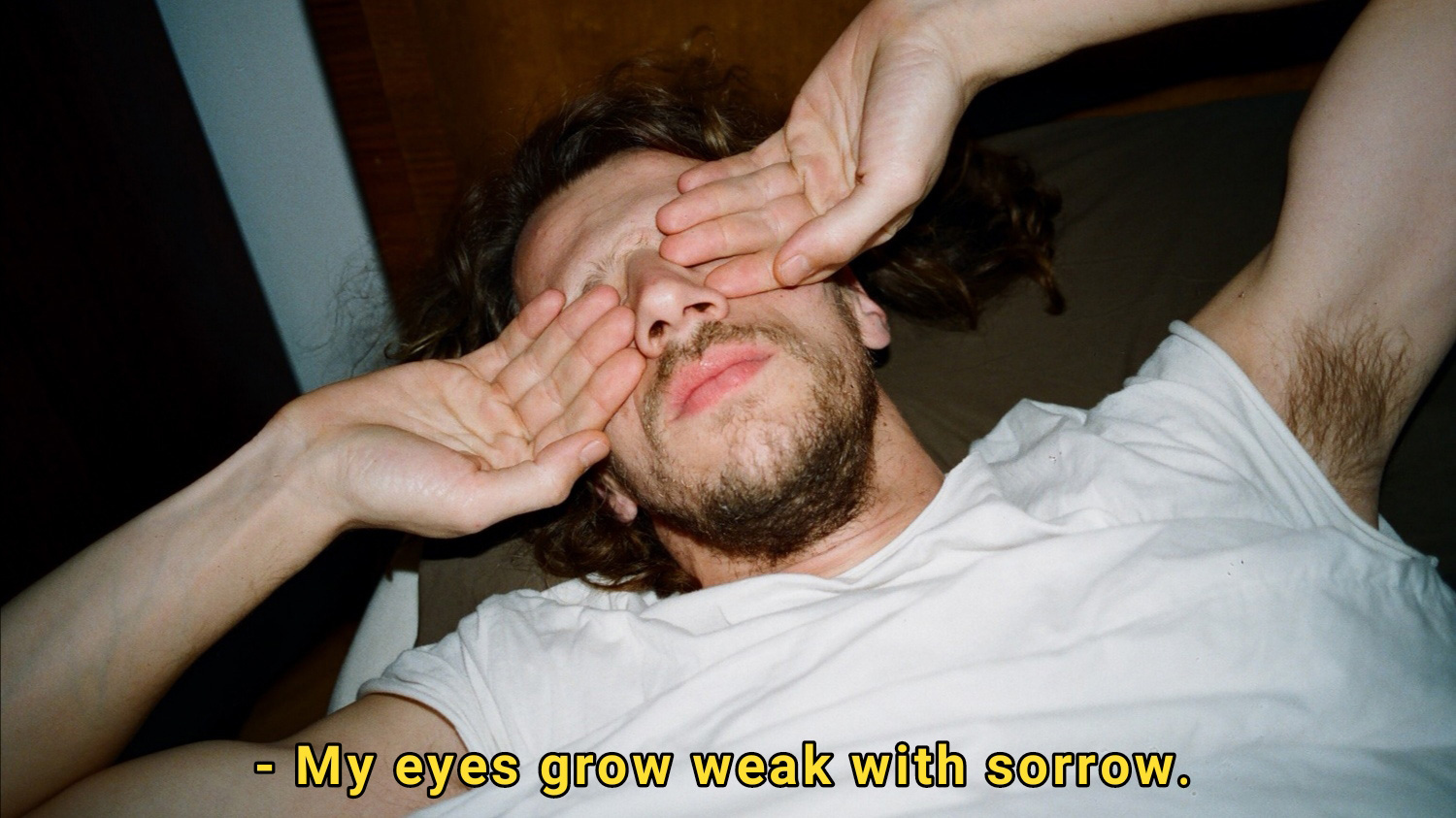

was presented at :
2023
Port of Dance, HKD - Croatian Cultural Home, Rijeka, HR
May 2023
Zagreb Youth Theatre, Zagreb, HR
February 2023
2022
Sad Sam Manifestation, Cankarjev dom, Ljubljana, SI
November 2022
Actoral, La Criée Theatre, Marseille, FR
September, October 2022
Nitrafest, Nitra, SK
September 2022
Istrian National Theatre, Pula, HR
September 2022
Festival DDD - Dias da Danca, Porto, PT
April 2022
2021
Zagreb Youth Theatre, Zagreb, HR
November 2021
Young Lions Festival, Ljubljana, SI
August 2021
Wiener Festwochen, Wien, AT
July 2021
Bunker – The Old Power Station – Elektro Ljubljana, SI
June 2021
Centre National de la Danse, Paris, FR
June 2021
Istrian National Theatre, Pula, HR
June 2021