Jon Fosse: Mother and Child 2 0 2 3
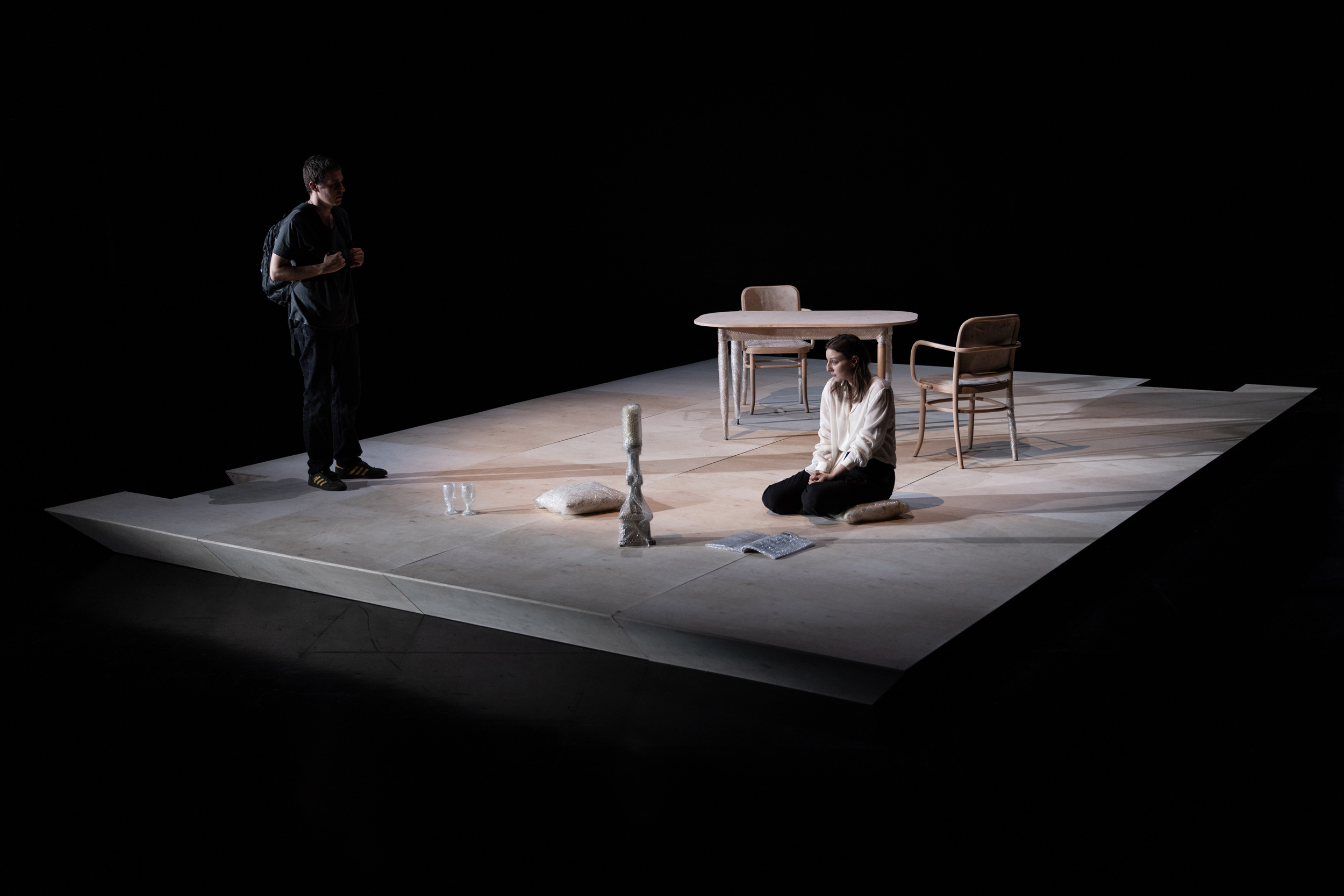
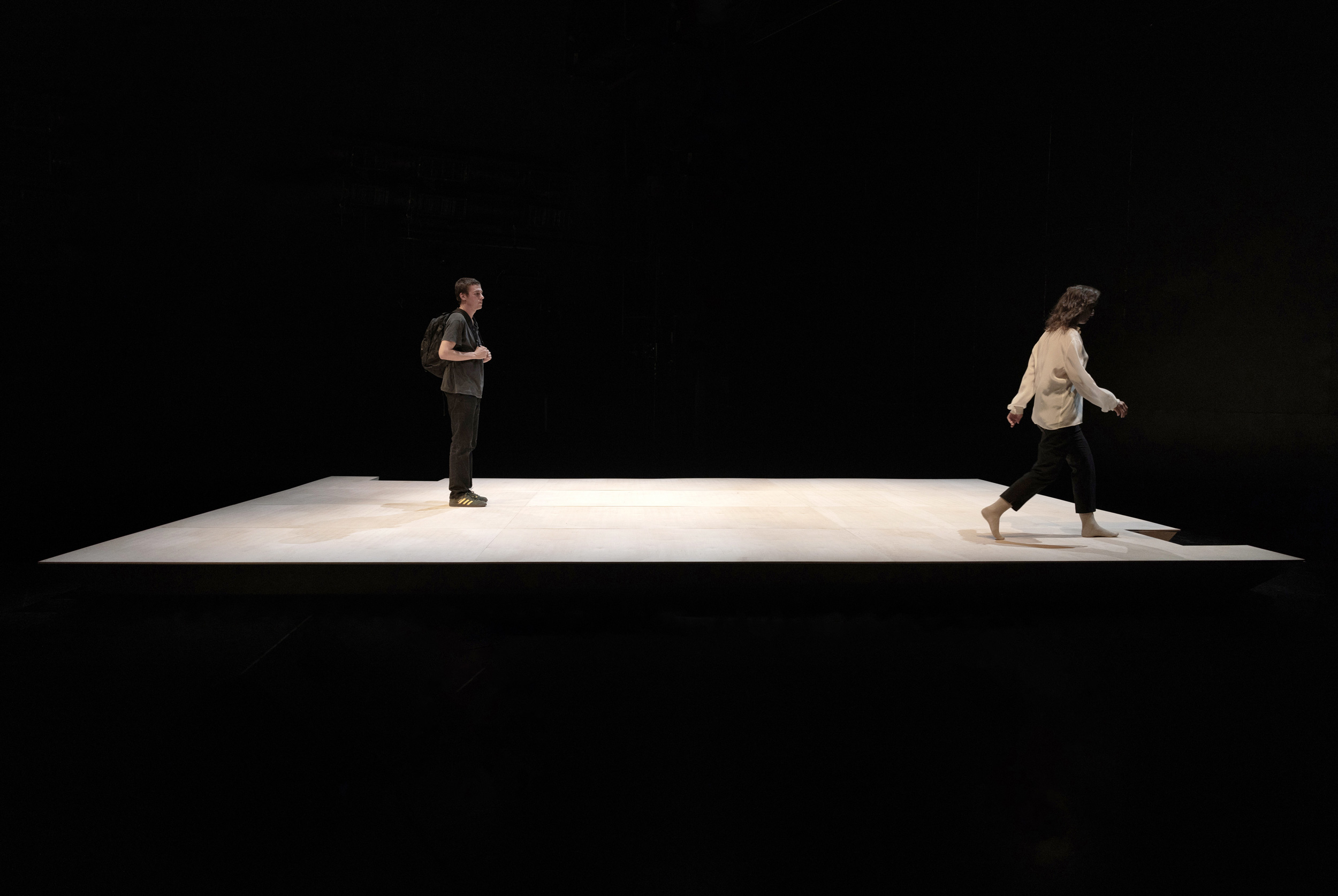
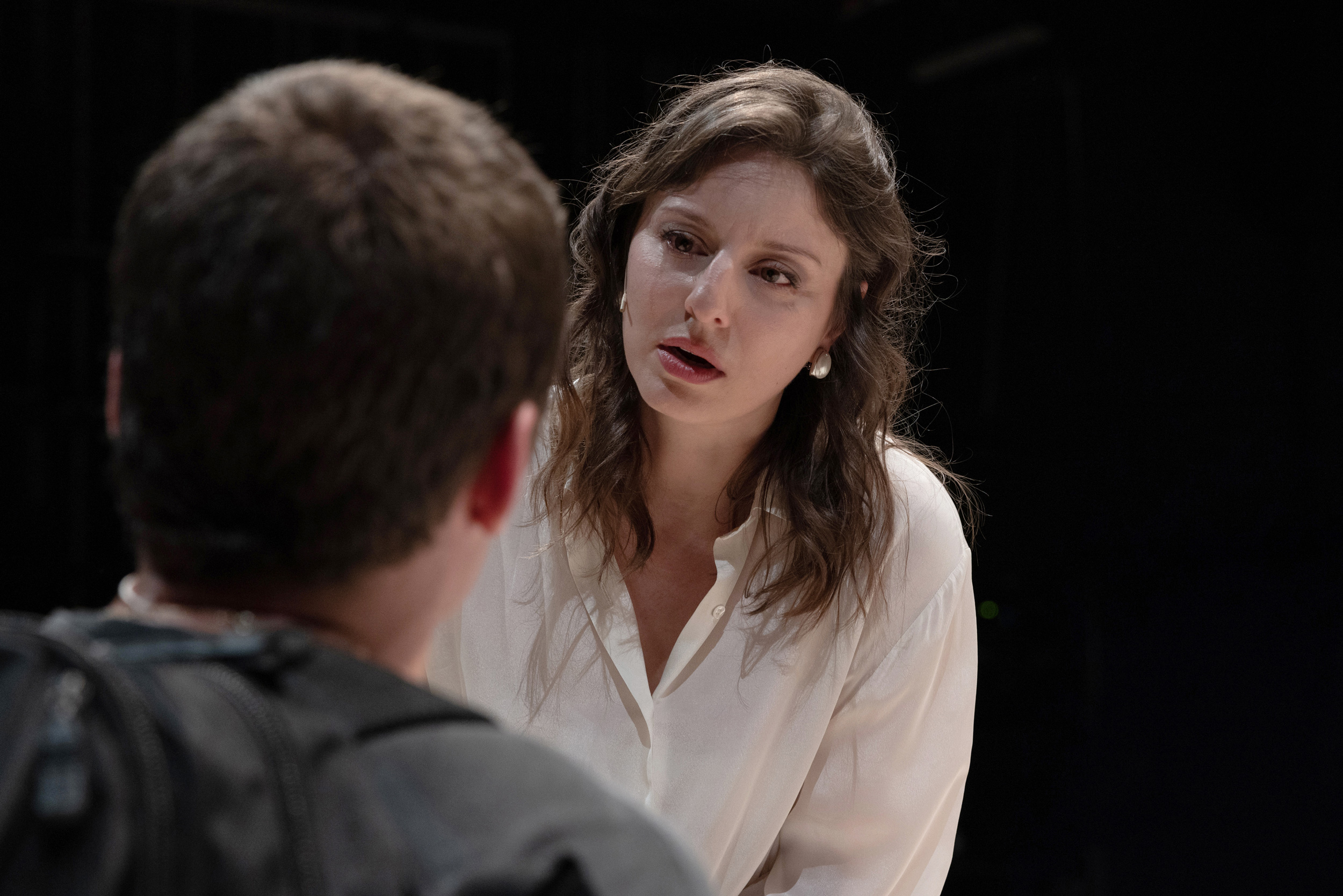
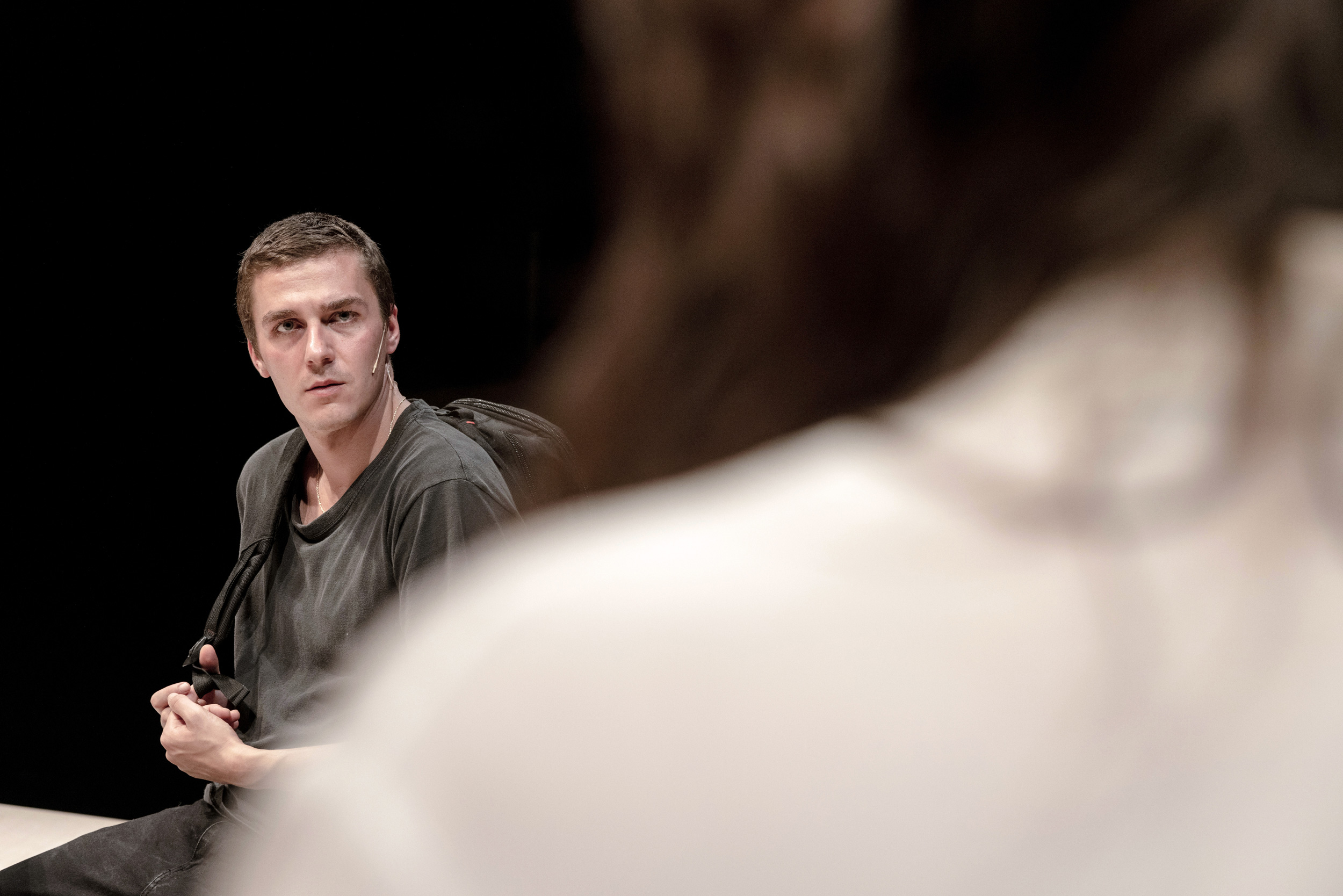
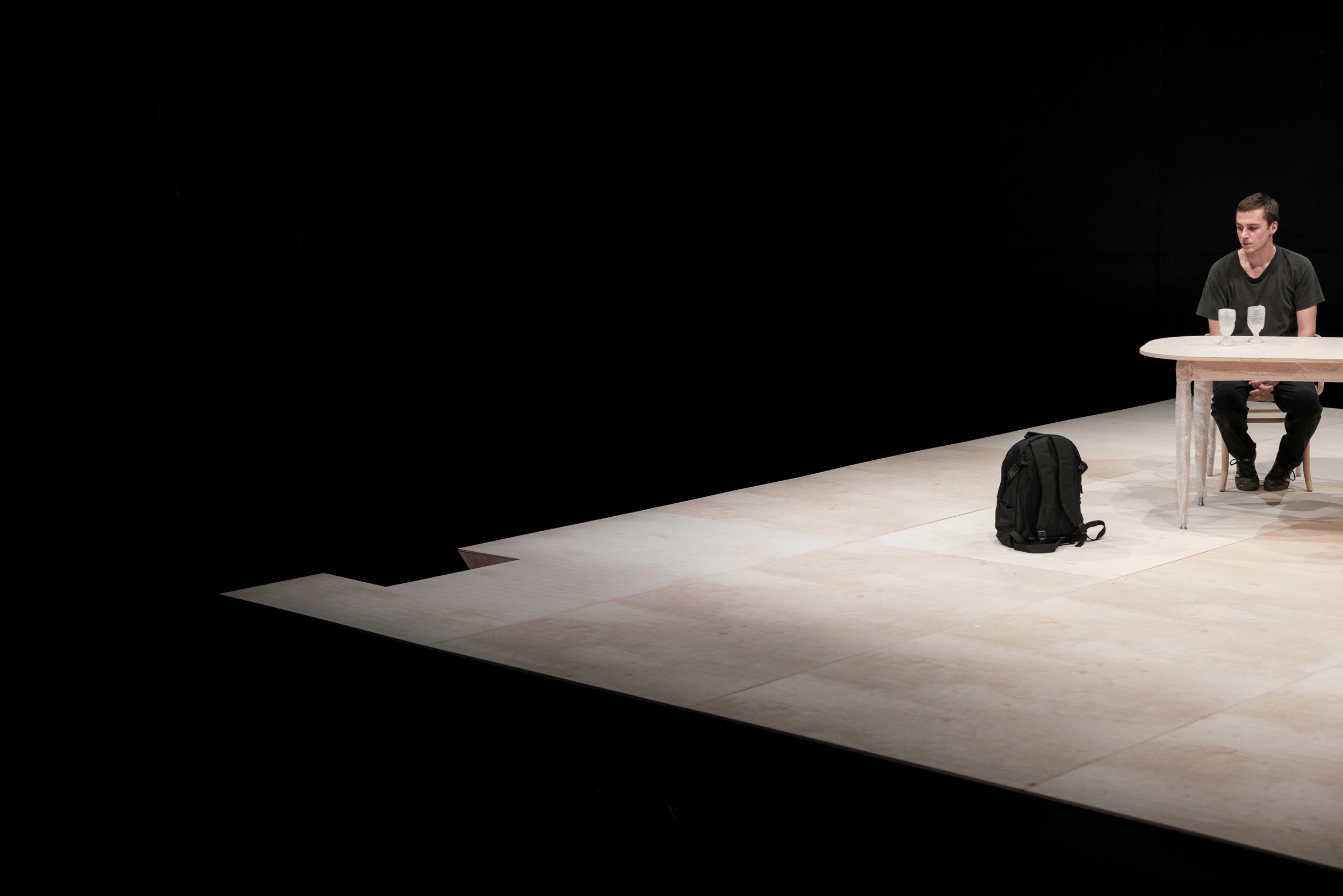
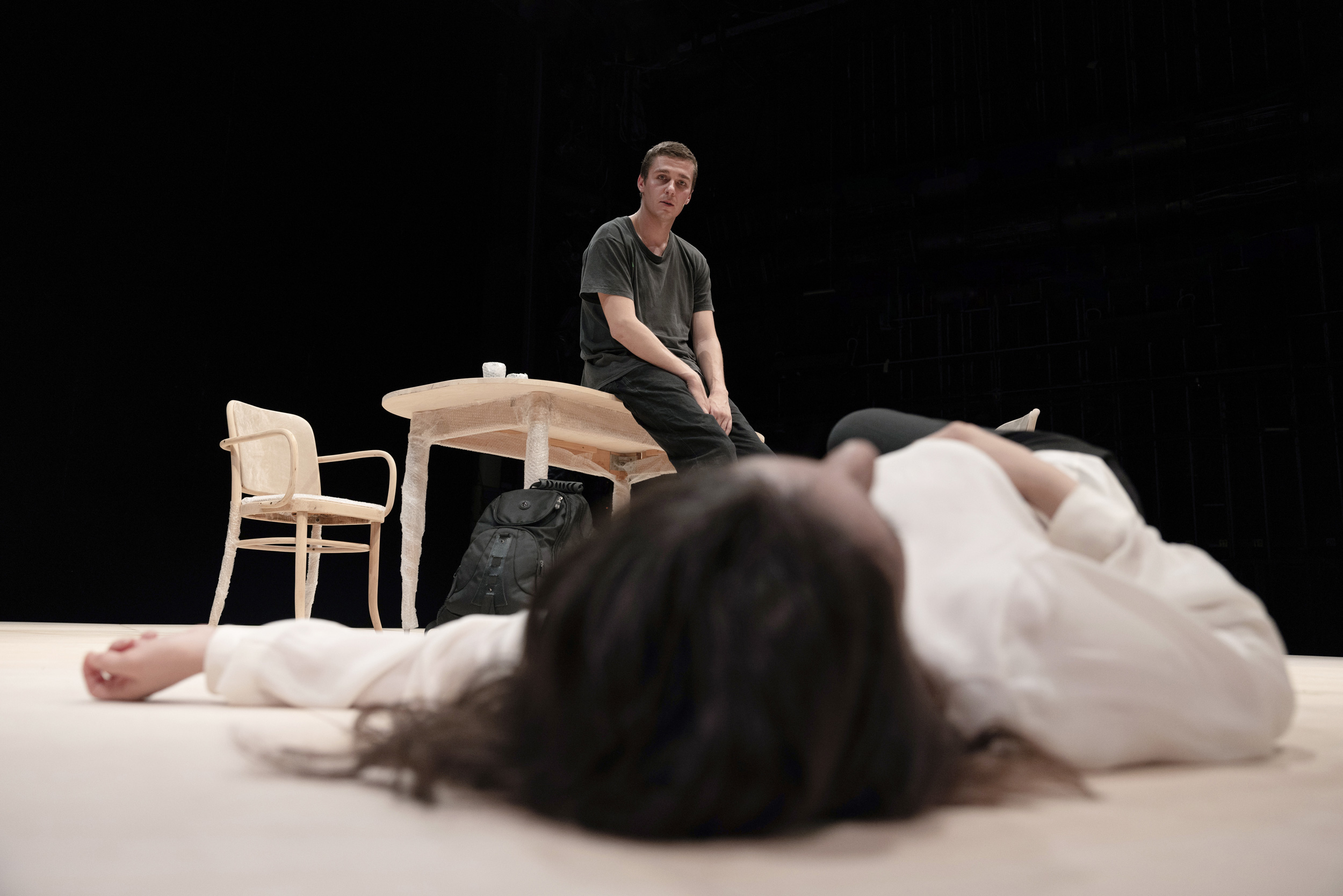
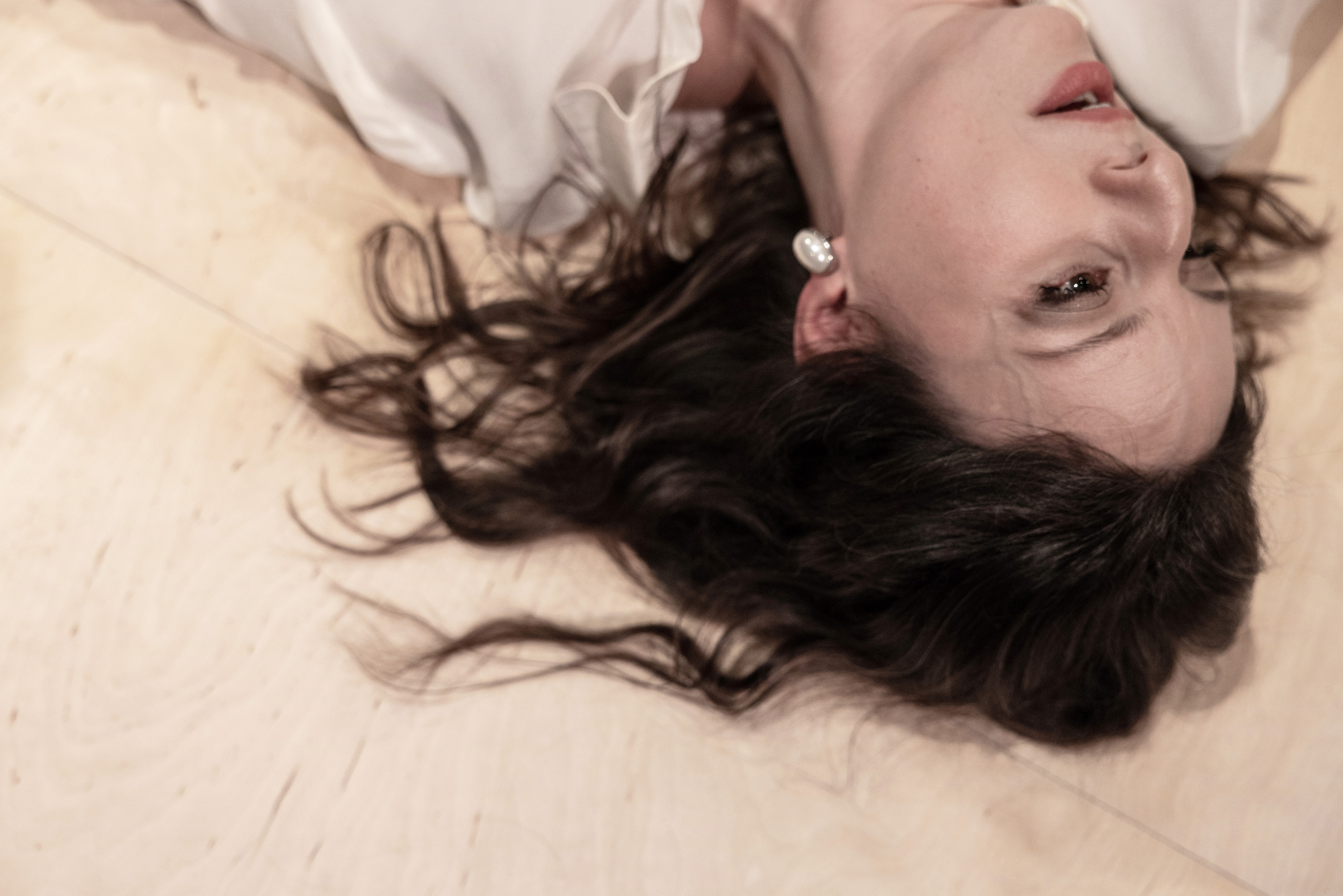
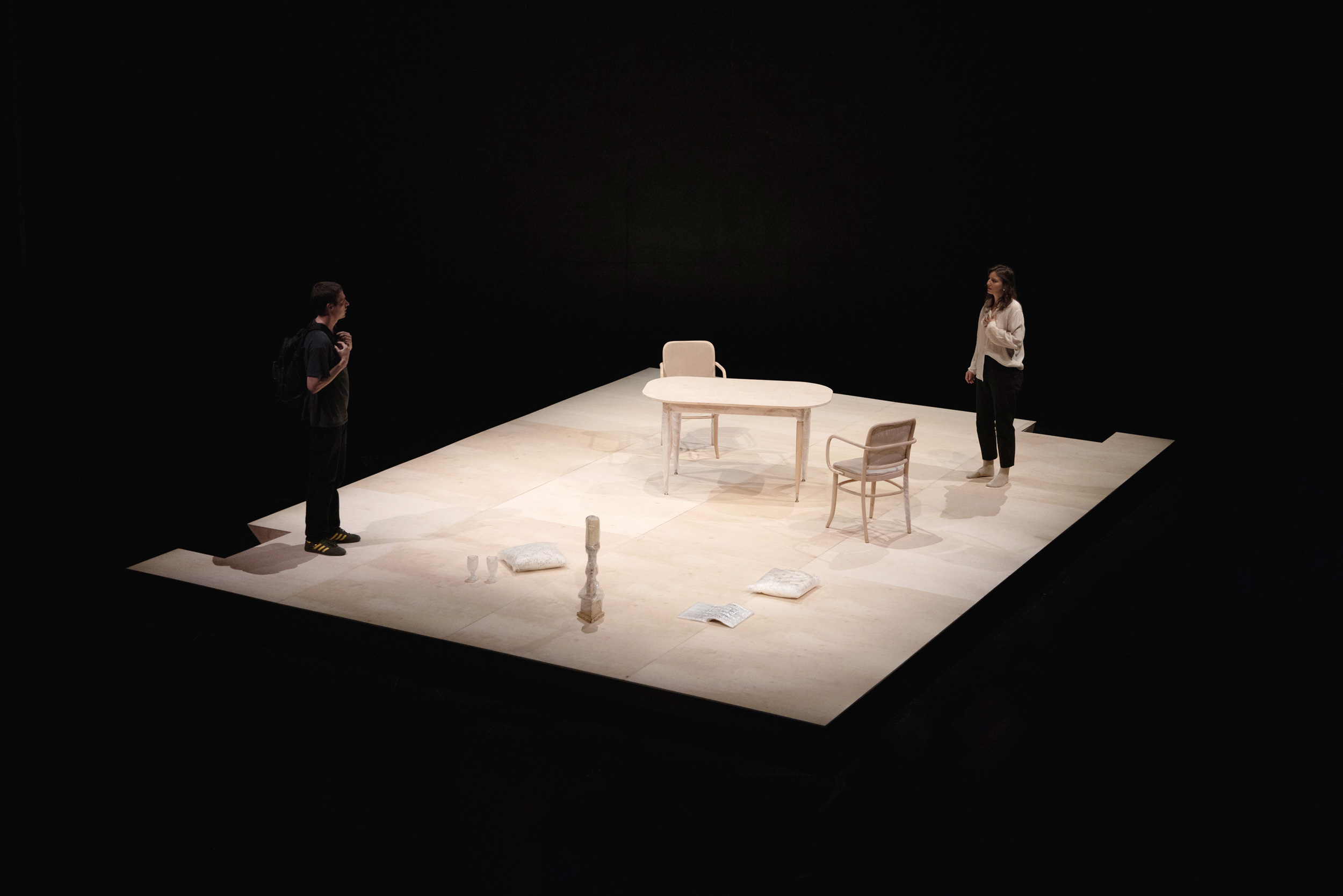
Jon Fosse’s Mother and Child (Mor og barn, 1996), one of his many short, one-act plays, may also be the result of a split, as well as a negotiation with the logocentric nature of European drama and theatre, and especially of the Nordic type. The proxemic potential of the character’s sons in this play is almost erased. He stands at the door, motionless, in no way “theatrical” or demonstrative – almost cut off from the reality of the theatrical act. The mother therefore labels him “unspeakable” on several occasions, although her mise-en-scene pressures and constant questions, in their powerful rhetoric, hardly demand an answer. She is his physical opposite and constantly moves through the space, with a practiced “administrative charm”, thus abolishing his dynamics. She babbles, mostly at the beginning, about home and her powerful job in the civil service, about the state of the country, about what she thinks of other women, about feminism, while beneath the shy social seduction of rhetoric, she is almost proud of her misogyny, despite her claims to support feminism. It seems to me that the Norwegian playwright has written a marvelous exercise in understatement, a poetic and narrative drama of subtexts or gaps, which the son, the child, should fill in order to re-establish his identity. They are strangers brought together by the accident of the fact of birth, or the process of birth, the positivism of biology, several decades ago - because of which the mother is now struggling in the torments of memory, and the son is trying to find some more clear identity framework, besides the fact that he is a child; not a son, but a child. The end of the play reveals to the reader that the mother's favourite dramatic story is Tennessee Williams's The Glass Menagerie (1944), a piece quite familiar to Ferlin’s choreographic oeuvre. The staging and visual idea of Matija Ferlin almost follows Fosse's dramaturgy of repetition. After all, this is precisely one of the characteristics of Ferlin's choreographic and performance mise-en-scène. The stage minimalism resembles many of his earlier performances, with a sloping wooden platform in the centre of the "empty" stage, displaced and decentred, along with a few unpolished, or rather roughly polished, chairs and a table. Ferlin's minimalism opens with a light counterpoint, where exactly what is invisible as the audience enters the auditorium - although passing close to the stage - suddenly becomes visible. Such stage minimalism not only contributes to the isolation of the characters, as is usually the case in a psychological duodrama, but also emphasizes the isolation of each of the two characters present - almost in the form of a monodramatic break, a rupture, in the sense of “although I am speaking to you, I am speaking to myself”. It is interesting that the relationships in the performance, which is a specific feature of Ferlin's reading of the play, are built through mise-en-scène, i.e., through constant penetrations into the off-stage space, through two exits on the stage - accessible mainly to the mother - as well as through her presence. This does not mean that the son never leaves the stage, although this is mostly the case, but rather indicates how the director's instruction has become a metonymy of the relationship at the conceptual level of the play, between the mother and son, or their constant processes of dispossessing and authorizing space. The closed nature of the performance is achieved in a similar way to most of his projects from the Staging a Play cycle, namely through constant manipulations with the viewer's perspective, but also the relationship between various settings, their “tuning”, and the text of the play itself, but this time completely spoken. And the language? In the original, this language is New, quite administrative, with a low frequency of interruptions, and almost irritatingly burdened with soliloquy, to the detriment of dialogue. The actors' speech resonating in “ear-mics”, which amplifies and doubles the voice, sometimes emphasizing a physical dimension of the voice, sometimes uncontrolled and spontaneous inhalation, exhalation, prolonging the vowels, almost materializes the linguistic nature of this play, which is another frequent obsession of Ferlin.
PHOTOS BY JELENA JANKOVIĆ
was presented at :
2025
Istrian National Theatre, Pula, HR
March 2025
2024
Theatre Marin Držić, Dubrovnik, HR
November 2024
Zlatni lav Festival, Umag, HR
June 2024
Borštnikovo srečanje Festival, Maribor, SI
June 2024
Virkas Festival, Virovitica, HR
March 2024
ZKM, Zagreb Youth Theatre, Zagreb HR
February 2024
Istrian National Theatre, Pula, HR
February 2024
2023
Istrian National Theatre, Pula, HR
September—November 2023