Canti di Prigionia 2 0 2 3
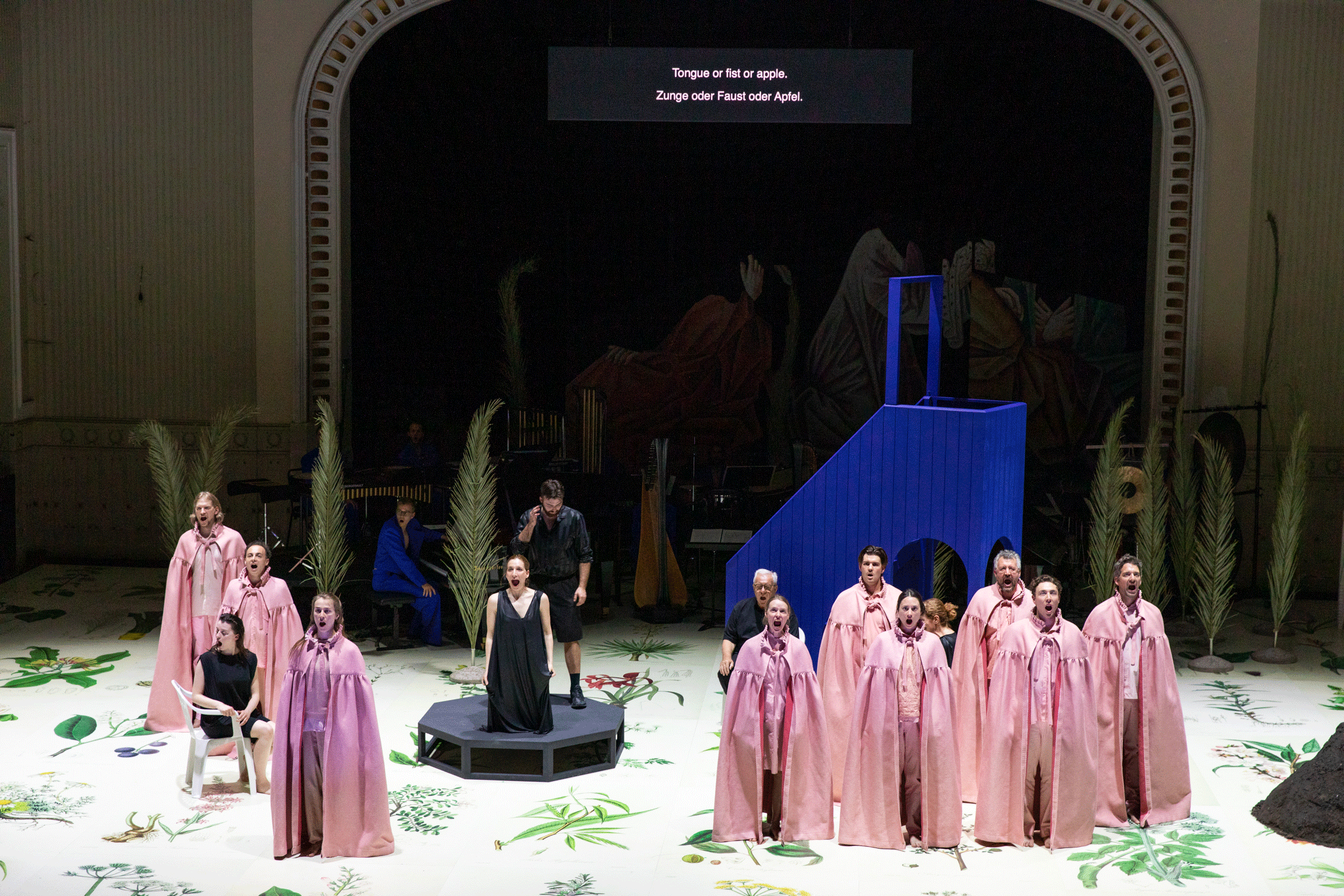
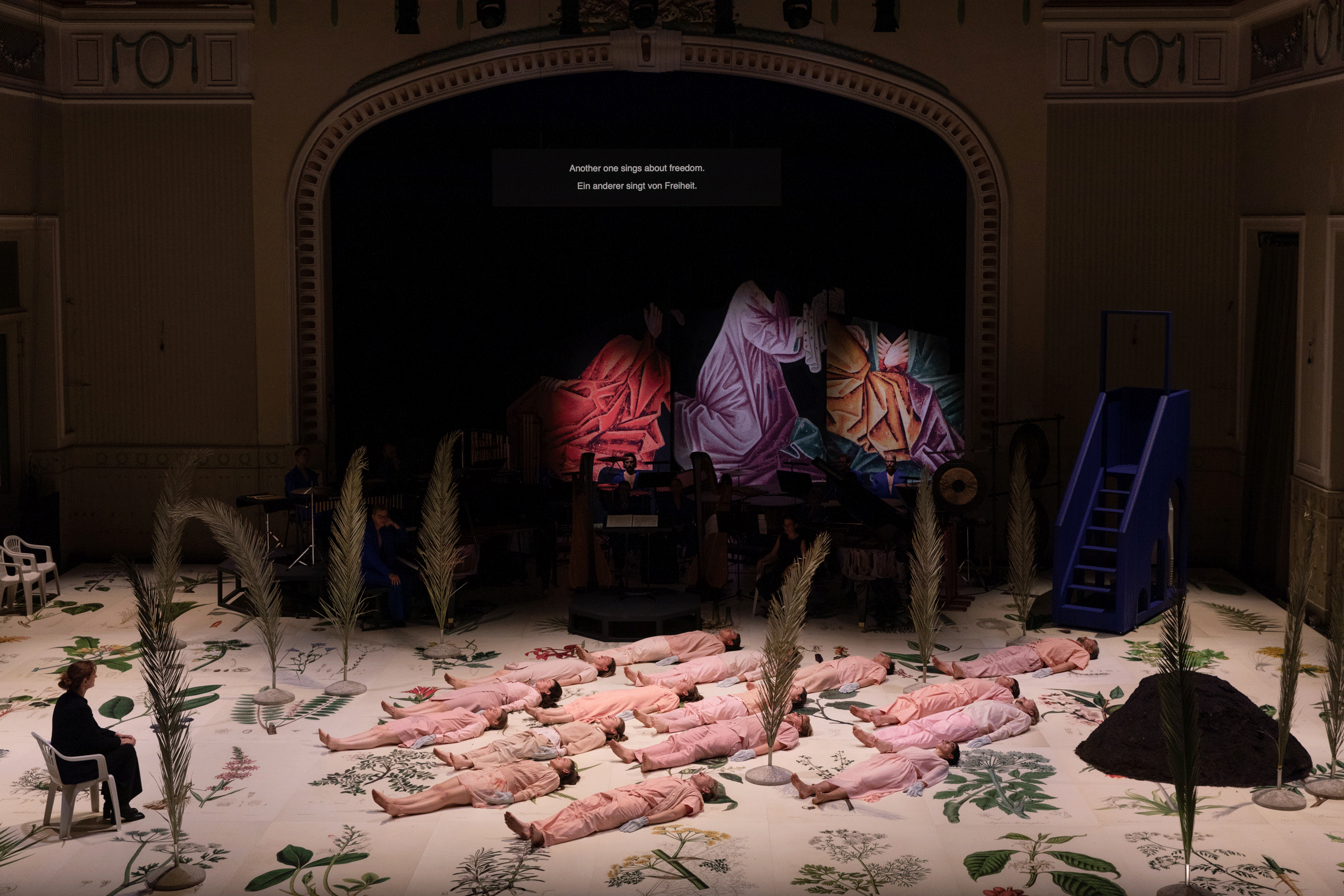
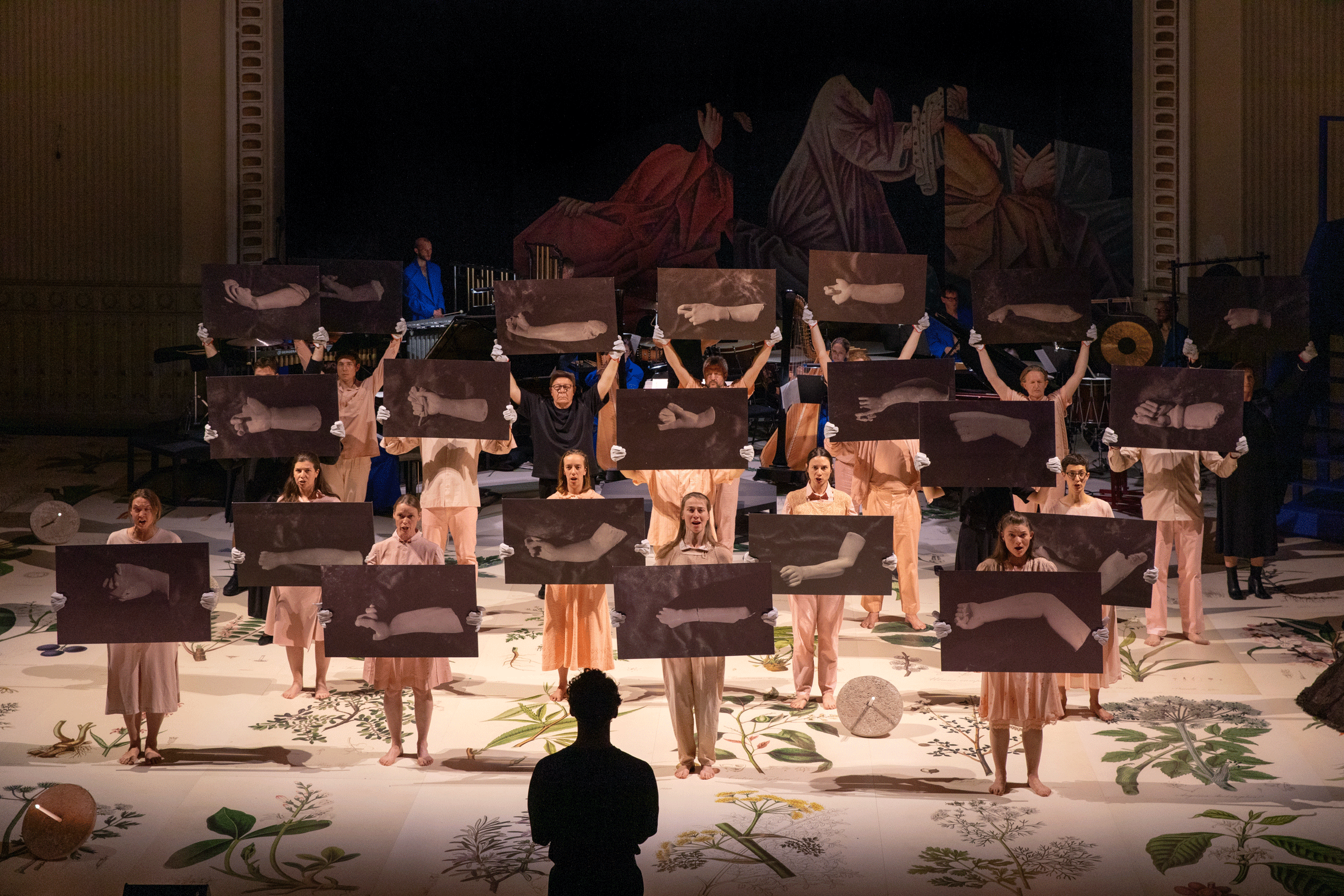
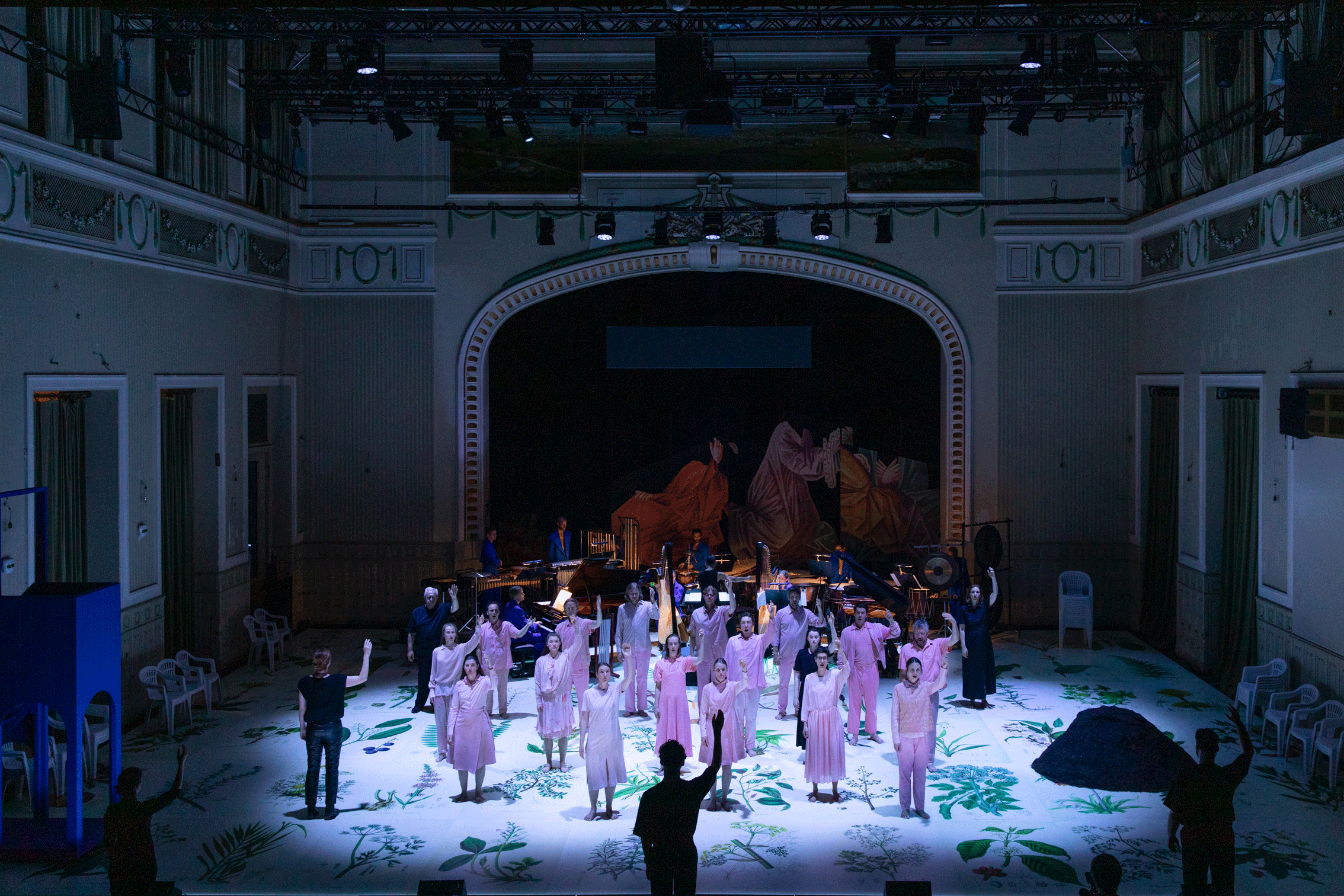
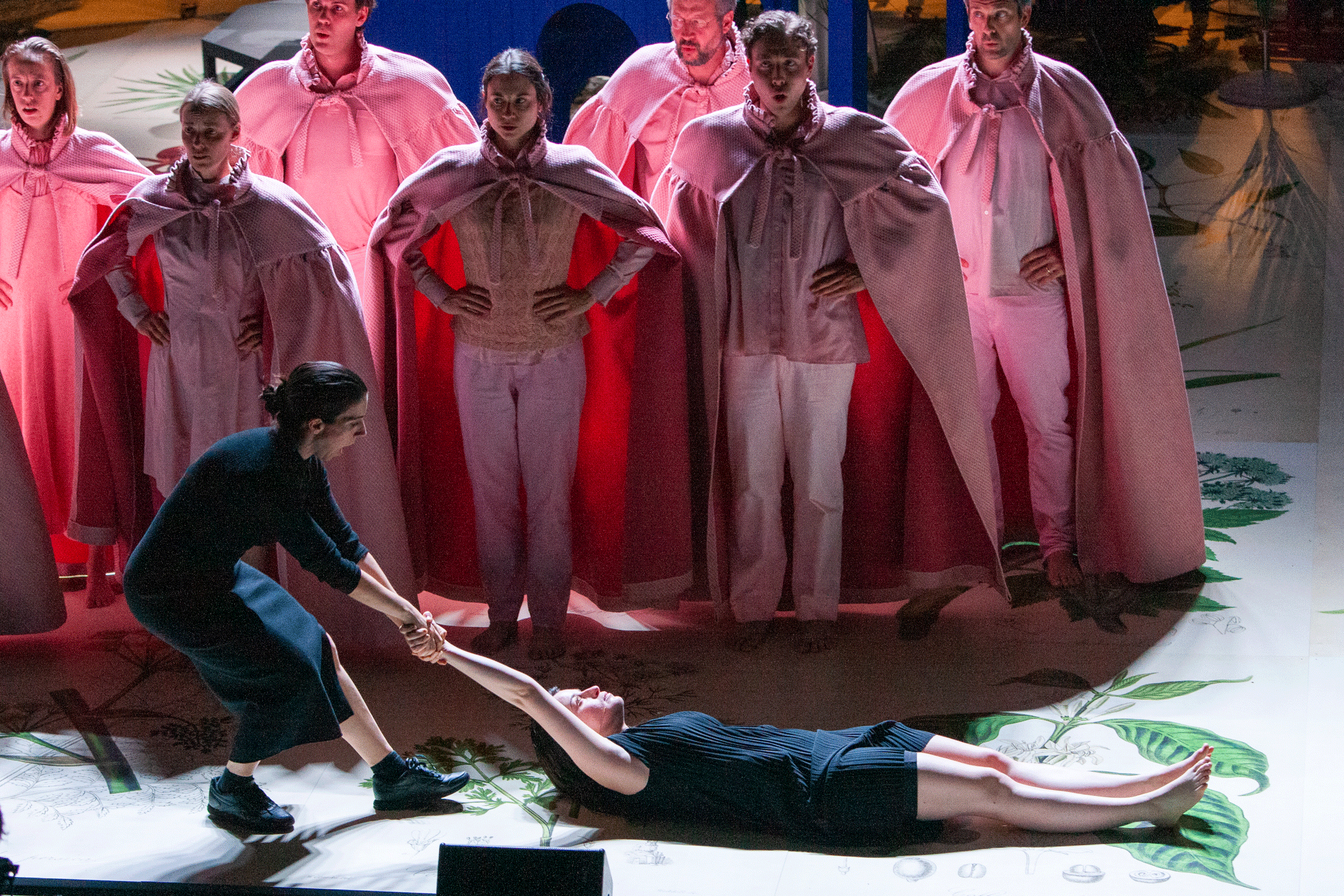
Canti di prigionia is a setting for chorus, two pianos, two harps and percussion by the Italian composer Luigi Dallapiccola. Dallapiccola sets his three texts of imprisonment in an interesting, interconnected structure: a prayer of Mary Stuart (Preghiera di Maria Stuarda: O Domine Deus! Speravi in Te. O care mi Jesu! Nunc libera me in dura catena, in misera poena, desidero Te. Languendo, gemendo et genu flectendo, Adoro, imploro, ut liberes me), an extract from Boethius' The Consolation of Philosophy (Invocazione di Boezio, De consolatione philosophia: Felix qui potuit boni fontem visere lucidum, Felix qui potuit boni Terrae solvere vincula) and Savonarola's unfinished Meditation on the Psalm “My hope is in Thee, O Lord” (Congedo di Girolamo Savonarola, Meditatio in psalmum In Te Domine speravi: Premat mundus, insurgeant hostes, nihil timeo Quoniam in Te Domine speravi, Quoniam Tu es spes mea, Quoniam Tu altissimum posuisti refugium tuum). Composed in 1938–1941, the first song was premiered on Brussels Radio in 1940, weeks before the Nazi Invasion of Belgium. Dallapiccola himself wrote that the work was a direct response to Benito Mussolini's speech introducing race laws to Italy: “I should have liked to protest, but I was not so naive as to disregard the fact that, in a totalitarian regime, the individual is powerless. Only by means of music would I be able to express my indignation” (Francesco Lombardi, notes to Il Prigioniero/Canti di prigionia, Sony Classical SK 68 323). A 2022 performance, that premiered in Jugendstiltheater am Steinhof, as a part of the Wiener Festwochen program, with two reprises, with a mixed cast of theatre performers, vocalists and instrumentalists, demonstrated the open cry against all forms of totalitarianism, so evidently omnipresent in the last century. In Ferlin’s performance, hence, the voice is presented through a variety of performative strategies, either through (actors’) lyrical or loosely conceptualized narrative, throughout metanarrative structures, or purely visual transpositions of different dramaturgical sequences, or, finally, through different choral (vocal) and musical partitures. Almost as in the genre of medieval lauda, a heterogeneous dramatic and visual arrangement is therefore set onto a biographical exemplum, based both on Dallapiccola’s works and his own life. As Luigi Dallapiccola was never eager to simply situate a plot into a certain genre, e.g., choral or operatic, Matija Ferlin, as well, does not situate the drama of imprisonment onto a biographic surface of his Istrian correspondent, but, on the contrary, exposes a possible “interpretative niche” for transnational artistic identities as such. Introductory part of the performance is, on the other hand, uttered by a list of political figures, indeed an imprisonment metaphor, that could easily echo in Dallapiccola’s transnational biography, e.g., Eman al-Nafjan, Ali Salem Tamek, Anka Berus, Maria Vladimirovna Alyokhina, Jawaharlal Nehru, Gulmira Imin, Marija Jula Ivanišević, Mahnaz Parakand, Maya Al-Zahrani, Nadya Tolokonnikova, Zorka Hrkić, Mohammed al_Rabiah, Abdulaziz al-Mesha, Emilija Hlavaček Božidar Adžija, Sveti Pavao, Dietrich Bonhoeffer, Martin Luther King, Osman Kavala, Abdullah Öcalan, Antonio Gramsci, etc. Canti di prigonia, thus, becomes a performance text that resonates deeply with the themes of captivity, political repression, and fluidity of historical narratives. Nevertheless, even though Ferlin’s choreo-work constantly re-situates itself within a recognizable transnational framework of multicultural Istria, interweaving the voices of prisoners, exiles, and political dissidents from various epochs and different geographical locations, performance’s choreographic script manages to evade direct political critique of oppression, rather giving a symbolic interpretation of the importance of memory and the body as a contested site of resistance. One of the most striking elements of Canti di prigonia is its extensive list of names—individuals who have suffered imprisonment, persecution, or exile due to their political beliefs, religious affiliations, or ideological resistance. This politics of naming disrupts the notion of imprisonment as a localized event, positioning it, instead, as a phenomenon that transcends historical and temporal premises, precisely in Di Cesare’s sense of liminality. The prisoners' experiences are not limited to a single nation-state but rather form part of an ongoing transnational struggle against tyranny and political oppression, being heterotopic and paradoxical t the same time, as resident foreigners, subverting territorial and sovereign logic, and therefore demanding a reimagining of cohabitation, i.e., in a sense of hospitality, rather than exclusion. By listing names from various sociopolitical contexts, Ferlin’s Canti constructs a transnational archive of resistance. This approach challenges the tendency to treat political persecution as an isolated occurrence within a single (national) history. Canti di prigonia thus presents the body as both a victim of oppression and a vessel of transnational resistance, capable of carrying memory and defiance across time and space. Yet, throughout Ferlin’s choreo-text, there is a certain tension between speech and silence. The motif of open mouths, often silent or violently forced to consume, serves as a metaphor for discursive control. This image recalls historical and Biblical moments of forced confessions, the suppression of languages, and the criminalization of dissent. In a transnational context, the suppression of speech is not limited to dictatorial regimes but extends onto democratic societies as such. At the same time, this performance also explores the subversive power of silence. The reference to Helene Weigel’s “silent scream” from Mother Courage and Her Children suggests that silence can itself be a form of resistance. In this sense, the absence of speech becomes a powerful act of defiance against regimes that demand conformity and verbal submission. The tension between forced silence and strategic silence becomes a key aspect of the performance’s critique of transnational power structures, but also of historical repetition and the cycles of oppression. One of the most profound transnational insights in Canti is, therefore, its suggestion that history operates in cycles: text moves fluidly between different periods of persecution, from medieval executions to fascist dictatorships, from colonial violence to modern-day political imprisonment, thus refusing the linear understanding of history, its post hoc ergo propter hoc nature. Even when performers address the audience, indeed they do not rely on conventional parameters of theater performance, staying concentrated on the director’s eye in the middle of the stage, almost as though they are hidden in an orchestra hole in the proscenium area. An overall image of Ferlin’s performance resembles deep meditation, contemplation, or even an intimate prayer, but its dominant dramaturgical mechanism embodies a certain desire “to control”, which is revealed in front of the audience.
PHOTOS BY NURITH WAGNER-STRAUSS









was presented at :
2023
Jugendstiltheater am Steinhof, Wiener Festwochen, Vienna, AT
May 2023